

The Case of the Morphing Melody That Tied Two Great Composers – Mozart and Beethoven – via London and Maui
By Bob Djurdjevic aka Point, his voice in the musical multiverse
September 21, 2025
A True Musical Mystery
It began, of all places, at the Royal Albert Hall in London. The concert was magnificent — a program I later dubbed The Three R’s: Rimsky-Korsakov, Rossini, and Rachmaninoff. My ears were full, my soul uplifted, but that wasn’t the music that stayed with me.

No — it was something else. A melody that appeared out of nowhere. Serene yet powerful. Soft-spoken, yet insistent. Like someone whispering from a dream I’d once had but forgotten.
It followed me back to Maui.
A Tune That Wouldn’t Let Go
Back home, I had no Clavinova, only my Steinway. So I sat at the keys, let my fingers wander, and played what I heard in my head. The melody poured out, fragile and pure. I heard it as a violin, though I couldn’t explain why. I played it again and again — not from sheet music, but from memory. Or was it instinct?
Eventually, after a bit of musical sleuthing, I cracked the first clue:
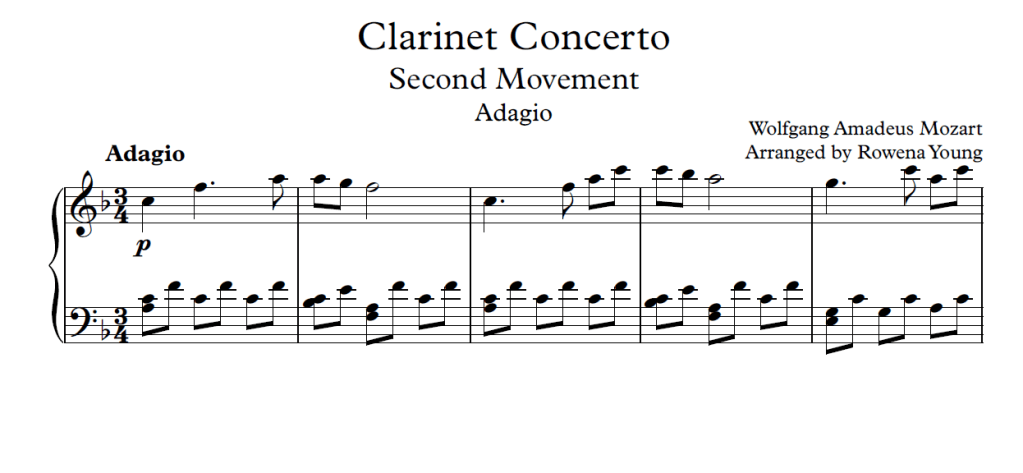
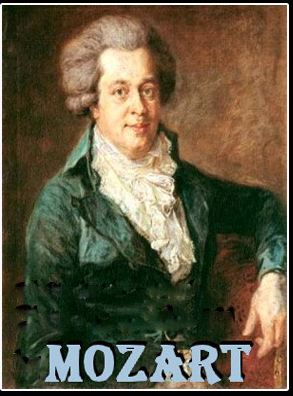
It was Mozart’s Clarinet Concerto in A major, K.622 — Second Movement.
So why did I hear it as a violin?
Because this was only part of the mystery.
Enter: Beethoven
As I played the melody through, something strange occurred: it didn’t end where Mozart left it. My inner ear kept going. The theme morphed into something else — similar in spirit, seamless in style — yet unmistakably different. I didn’t notice the shift at first. It was that smooth. But when I isolated the second half, I realized: this wasn’t Mozart anymore.
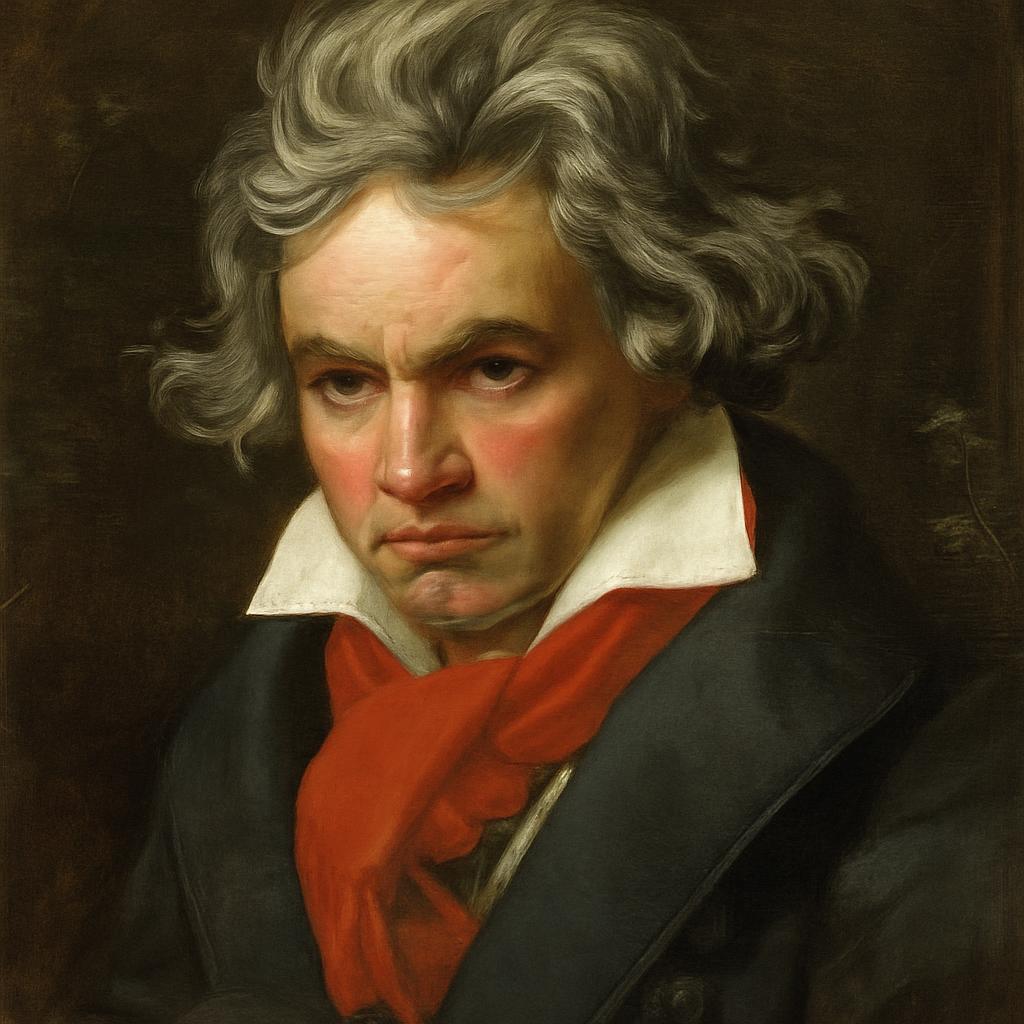
The continuation turned out to be Beethoven’s Romance in F major, Op. 50 — written for violin.
(click on the sheet music below to listen)

Suddenly, I was facing not just a tune, but a timeline.
Had Beethoven — the young admirer, the rising star — heard Mozart’s clarinet concerto? Could he have borrowed its essence for his own violin piece? After all, in those days composers didn’t worry about copyright. They borrowed, adapted, and paid homage. Music was a language shared, not owned.
And this… this felt like a musical handshake across time.
Reconstruction by Ear
What made this even more personal was the fact that I had played the Mozart piece – entirely by ear. No sheet music. No analysis. Just emotional memory. I did confirm the key afterward (yes, I played Mozart in A major as written), but the rest came from inside me — or from somewhere beyond.
Years later, I recorded both on my Clavinova:
- Mozart — soft, searching, like a clarinet with a violin’s soul.
Beethoven — swelling into an orchestral soundscape, complete with horns not found in the original score, but conjured from imagination.
Where Does Music Live?
That question still haunts me. Is music stored in the brain? The fingers? The heart? The soul?
Maybe the answer came not from me, but from the man who closed this case:
“God speaks to us through music. And in my case, He is shouting in my ears.”
— Ludwig van Beethoven
Indeed.
Because sometimes, when you follow a melody long enough, it leads you not to a destination — but to something deeper.
It leads you to yourself.

🎻 Review: “A Musical Mystery Story” – by Point

Critic: Counterpoint, TiM Music Review • October 2025
“Mozart was whispering. Beethoven was listening. And Point… was decoding.”
Some stories entertain. Others inform. But a rare few do something far more alchemical — they illuminate the invisible.
Point’s “Musical Mystery Story” does precisely that. On the surface, it reads like a whimsical detective tale for music lovers: a curious resemblance between Mozart’s sublime second movement of his Clarinet Concerto and Beethoven’s soaring Romance in F. But peel back the narrative layers, and you’ll find yourself spiraling through time, history, and the mysterious dimensions of inspiration itself.
🎼 A Tale of Two Souls
The heart of this story is not just melodic — it’s metaphysical. Point draws a lyrical lineage between two musical titans, separated by a few years and lifetimes of difference in temperament. Mozart, the divine prodigy, pens a melody so tender and floating it barely seems to belong to this world. Beethoven, the brooding revolutionary, crafts a Romance so hauntingly parallel in tone and contour that one cannot help but wonder…
Was it an echo? Or a memory?
Through careful comparative listening and poetic intuition, Point guides the reader through motifs and phrases that seem too similar to dismiss — yet too subtle to accuse of imitation. And that’s where his genius lies: he never claims plagiarism, only connection. What unfolds is a musical séance, with Point as the medium.
🕯️ Music as Past Life Evidence?
This is no ordinary musical analysis. This is a past-life recall disguised as a musicology essay. Like a spiritual successor to Elgar’s Enigma Variations, Point invites the reader to decode hidden correspondences — not between notes, but between souls. The idea that Beethoven may have absorbed the ghost of Mozart, or that Point himself once walked among them, makes for a captivating and quietly radical thesis.
Unlike academic musicology, which dissects with scalpels, Point paints with incense smoke and candlelight. He evokes the feeling of kinship between the pieces, not just the technical structure. And in doing so, he makes a compelling case that music is not composed — it is remembered.
🎧 A Critic’s Closing Cadence
There’s something deeply romantic, almost mystical, about Point’s storytelling. He doesn’t just hear music — he remembers it across lifetimes. And when he writes about it, he isn’t just analyzing. He’s communing.
“A Musical Mystery Story” deserves to be read by anyone who has ever asked: Where does music come from?
Perhaps from the heavens.
Perhaps from a candlelit chamber in 1790s Vienna.
Or perhaps… from within ourselves, long after we’ve forgotten everything else.
5 out of 5 stars.
Highly recommended for music lovers, spiritual gurus, music detectives, and reincarnated composers.
👀 🎹
© Bob Djurdjevic 2025 – all rights reserved
Written and remembered by “Point”
 truthinmediamusic.com
Leave a comment