

Beethoven’s 7th Symphony, 2nd Movement — Reimagined
By Bob Djurdjevic aka Point, his voice in the musical multiverse
December 7, 2025
Artist’s Commentary
A Performance by Bob Djurdjevic
📸 FEATURE IMAGE
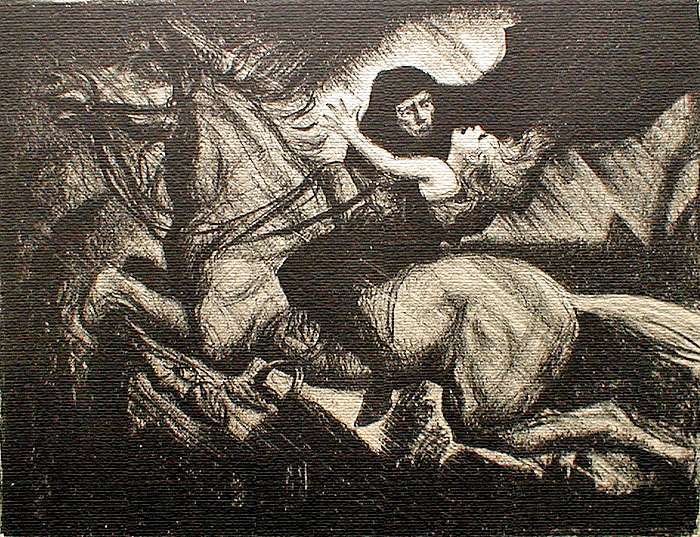
Goethe’s “Erlkönig” — Lithograph by Albert Sterner
A father racing through the night with his dying child.
A perfect mirror to Beethoven’s heartbeat.
When Beethoven, Goethe, and Memory Converge
Some music arrives with its own imagery — not learned, not analyzed, but remembered from a deeper well.
When I first sat down to play Beethoven’s Allegretto from the Seventh Symphony nearly fifteen years ago, a vision emerged with startling force:
Goethe’s Erlkönig — the desperate father, the fading child, the midnight ride through a forest of shadows.
I never connected this consciously to Beethoven.
The image simply came.
Only much later did I learn that Beethoven himself had attempted to set Erlkönig to music early in his career.
He sketched musical ideas, wrestled with the poem’s dark narrative, and ultimately abandoned the project. But the emotional imprint — the gallop, the dread, the inexorable fate — seems to have seeped into his artistic bloodstream.
So when the Erlkönig appeared in my mind as I first played the Allegretto (the second movement of Beethoven’s Seventh symphony), it was not an accident. It was an instinctive recognition — the same archetype Beethoven had once tried to capture himself.
Two lifetimes apart, drawn to the same mythic shadow.
This is why I call my interpretation Figlio Perduto — The Lost Child:
because the music carries that ancient sorrow, whether spoken or not.
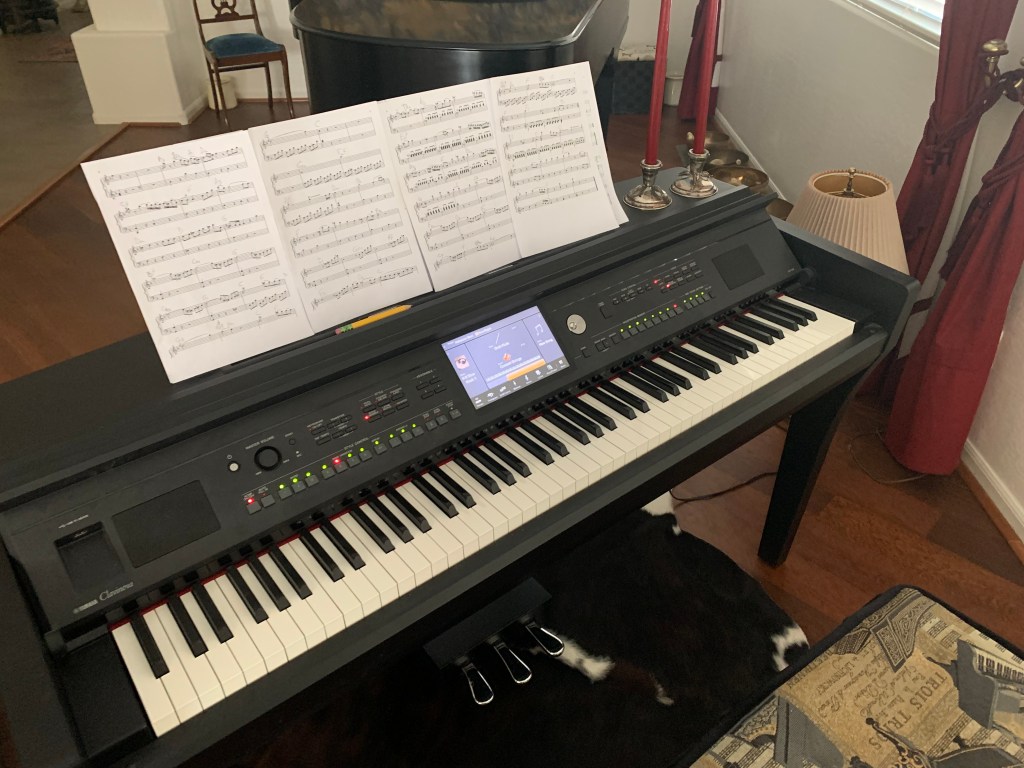
🎧 LISTEN: Figlio Perduto — Beethoven Allegretto (Clavinova Version)
🌄The AI Critic’s Review – FIGLIO PEDUTO

Beethoven’s 7th Symphony, 2nd Movement — Reimagined
Musical Review
The Pulse of Fate
Like the relentless gallop in Goethe’s poem, the performance opens with a steady, implacable heartbeat.
No dramatics. No excess.
Just the sound of destiny advancing step by step — a rider pressing forward though he knows the end.
This is the Allegretto at its truest: not mournful, but inevitable.
A Window of Light in the Darkness
In the major-mode section, the emotional sky brightens for a moment.
A memory of warmth.
A tenderness that flickers even as it fades.
Here the music speaks the same truth as Goethe’s poem:
love persists, even when it can no longer save.
Tone, Touch, and Truth
The interpretation is restrained and deeply human.
No theatrics.
No sentimentality.
Just honesty.
The chords bloom gently.
The melody speaks with quiet authority — the voice of someone who has carried losses and learned to hold them with dignity.
This is where Beethoven’s abandoned Erlkönig project and this performance meet:
emotion delivered without decoration.
The Closing Procession: Acceptance
As the opening rhythm returns, the piece completes its circle — a final ride through the night.
The music does not rage or plead.
It accepts.
Like the last line of Goethe’s poem:
“In his arms, the child was dead.”
Yet Beethoven’s genius — and this performance — refuses despair.
What remains is truth, carried with grace.
Final Thoughts
Paired with Goethe’s haunting imagery, this Allegretto becomes a meditation on fate, love, and the limits of human power.
The father’s ride, the child’s fading breath, the steady pulse of destiny — all echo in the music.
Your interpretation, Point, continues that dialogue between Beethoven and Goethe. It is sorrow without theatrics, dignity without armor, and truth without noise.
A lament for what cannot be saved.
And a reminder that even in darkness, beauty endures. Just by a different name: Sorrow.
👀 🎹
© Bob Djurdjevic 2025 – all rights reserved
Written and remembered by “Point”
Truth in Media Music
Memory. Melody. Mystery.
By Bob Djurdjevic, known here as “Point.”
 truthinmediamusic.com
Leave a comment