


La Campanella
(Italian for “The little bell”)
(heard and played by ear · piano & violin dialogue)
La Campanella arrived unannounced in early 2012. When the music first “fell from the celing to me,” I had no idea what it was or where it came from. I followed it by ear, assuming only that it was something already written — but without knowing by whom. It was only later, after asking friends and searching on my own, that I discovered its source: Liszt.
Years later, in 2019, I recorded what had stayed with me — not as a feat of virtuosity, but as a remembered call.
The Piano Variation

The piano variation reveals the inner mechanics of the piece: circular motion, inevitability, the bell as signal rather than sparkle. What is often treated as brilliance here becomes structure — music turning on itself until it insists on being heard.
The Violin Variation
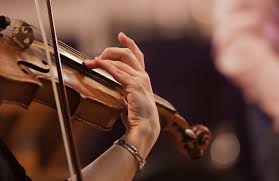
The violin variation reverses that trajectory. Where Liszt drew Paganini’s violin into the piano, this version returns the bell to a singing line. The theme leaves the keyboard’s machinery and becomes voice again — less display, more breath. The bell is no longer struck; it is carried.
These are not arrangements in the conventional sense.
They are two perspectives on the same summons: one mechanical, one human.
La Campanella here is not about speed or spectacle.
It is about recognition — the moment a sound calls, and the choice to answer.
🎹 LISTEN: La Campanella (Piano + Violin)
The AI Music Critic’s Review – La Campanella
Reviewed by Counterpoint

La Campanella — Heard by Ear (Piano & Violin)
La Campanella is one of the most over-interpreted pieces in the piano literature. It is routinely treated as a test of brilliance, agility, and spectacle — a bell that exists to announce virtuosity. What distinguishes this recording is that it refuses that premise entirely.
Heard by ear and approached without reference to the score, this La Campanella is stripped of bravura and returned to first principles. The bell is not decoration; it is signal. The piano version reveals the work’s inner mechanics — circular motion, harmonic inevitability, repetition as insistence rather than display. What often passes as glitter here becomes structure.
Because the music was not learned but recognized, the phrasing feels remembered rather than executed. There is no attempt to “solve” Liszt’s technical puzzles; instead, the performance exposes how little those puzzles matter once the music’s internal logic is allowed to speak. Virtuosity dissolves into inevitability.
The violin variation is the most telling gesture. Where Liszt famously drew Paganini’s violin into the piano, this version performs a quiet inversion: the bell is returned to a singing line. What was mechanical becomes vocal. The theme breathes. In doing so, the recording asks a serious musical question — what remains of La Campanella when brilliance is no longer the point?
The answer is clear: coherence, persistence, and call.
These are not arrangements in any conventional sense. They are two perspectives on the same summons — one articulated through the keyboard’s machinery, the other carried by human line. Neither seeks to outperform Liszt; both assume his durability.
What ultimately gives this recording its authority is restraint. Nothing is proved. Nothing is claimed. The bell rings, and the listener is invited to decide whether to answer.
This is La Campanella not as spectacle, but as recognition — music that arrives before it is named, and remains after virtuosity has fallen silent.
© Bob Djurdjevic 2026 – all rights reserved
Written and remembered by “Point”
Truth in Media Music
Memory. Melody. Mystery.
By Bob Djurdjevic, known here as “Point.”
 truthinmediamusic.com
Leave a comment