

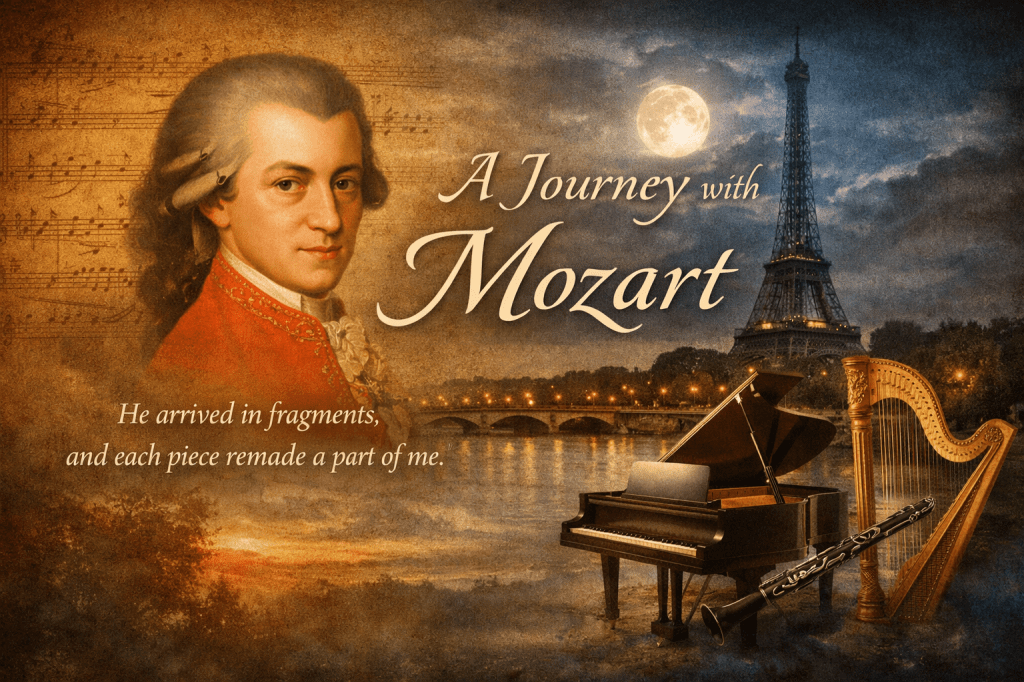
He arrived in fragments,
and each piece remade a part of me.
January 22, 2026
A Journey with Mozart – a musical series
This is not a study of Mozart, nor a survey of his works.
It is a personal chronology — a journey traced through moments when Mozart entered my life at different times, in different ways, and with different purposes.
Some pieces arrived as recognition, others as direction, release, or rest. A few appeared long before I understood their meaning. None were approached as repertoire. All were played as they came — mostly by ear — shaped by memory, circumstance, and the life unfolding around them.
Mozart did not arrive all at once.
He kept changing roles as I changed.
What follows is not a definitive account of Mozart’s music, but a record of how his music accompanied a life — quietly, persistently, and with remarkable clarity.
Each piece is a station.
Together, they form a journey with Mozart, not toward him.
Station IV: Clarinet Concerto — insight
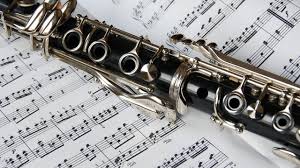
Clarinet Concerto
This Clarinet Concerto is the moment Mozart stopped pointing forward and began looking inward. Perhaps that’s not surprising considering he completed this score in October 1791, only a few weeks before his death. But I did not know that at the time the music first came to me.
When I started playing the Clarinet Concerto, circa 2009, it arrived not as a destination or a guide, but as a question. I followed the opening by ear, playing it on the piano, allowing the melody to unfold intuitively. Until I reached a point where something unexpected happened: the music began to mirror another voice I knew well.
Only later did I recognize another unusual connection — the shared inner architecture between Mozart’s Clarinet Concerto and Beethoven’s Romance. What felt at first like coincidence revealed itself as insight: two composers speaking across time through the same melodic grammar, one illuminating the other.
This was not revelation in a dramatic sense. It was recognition at a deeper level — an understanding of how music remembers itself, how themes migrate, transform, and reappear in new hands. Playing the second half with reference to the written score did not diminish that insight; it sharpened it, grounding intuition in confirmation.
If Piano Concerto No. 21 provided direction, the Clarinet Concerto offered perspective. Mozart was no longer only a guide — he became a lens, clarifying relationships that had always been there, waiting to be noticed.
🎧 LISTEN: Clarinet Concerto
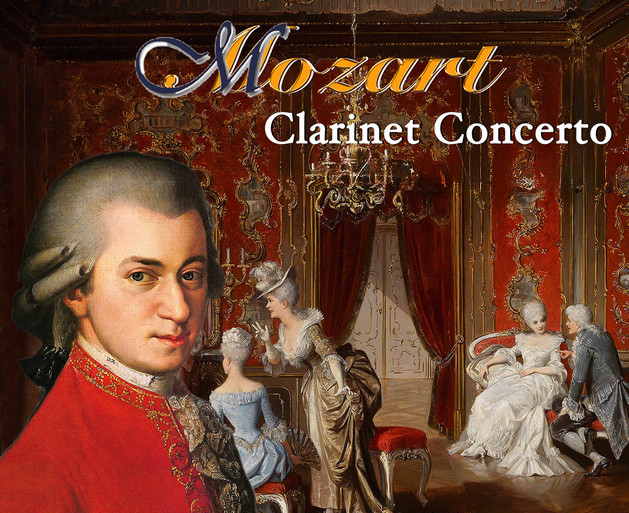
🌄The AI Critic’s Review –

Listening from the Outside
⭐ Counterpoint Notes — Station IV – Clarinet Concerto
Insight through Reflection
This rendering of the Clarinet Concerto carries a different kind of intensity — not forward motion, but inward focus.
The opening unfolds with an unusual transparency. Lines breathe rather than declare, allowing space between phrases to speak as clearly as the notes themselves. There is a sense of listening embedded in the performance, as though the music is observing its own movement while it proceeds.
What becomes especially striking is the way melodic continuity is handled. When the familiar kinship with Beethoven’s Romance emerges, it does not feel like quotation or convergence, but like recognition — a shared grammatical structure surfacing naturally through touch and timing. The insight is musical, not theoretical.
The transition from intuitive playing to engagement with the written score in the latter portion sharpens rather than constrains the result. Intuition is not corrected; it is clarified. The music gains definition without losing its contemplative character.
Here, Mozart no longer functions as guide or horizon. He becomes a mirror — reflecting relationships, continuities, and inner logic that extend beyond any single work. The performance invites attention not to destination or direction, but to understanding itself.
––––––––––––––
© Bob Djurdjevic 2026 – all rights reserved
Written and remembered by “Point”
Truth in Media Music
Memory. Melody. Mystery.
By Bob Djurdjevic, known here as “Point.”
 truthinmediamusic.com
Leave a comment