

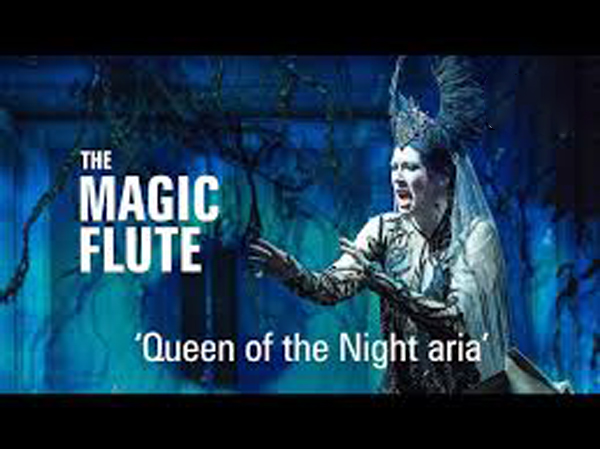
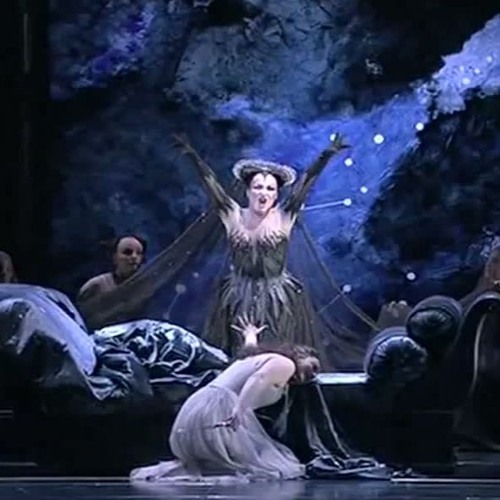
“Queen of the Night” from Mozart’s “Magic Flute”
Some melodies do not announce themselves as discoveries.
They arrive as recollections.
After recording Music of the Night, I began hearing another line beneath it — sharper, higher, almost incandescent. It would not go away. It wasn’t something I was trying to write. It was something insisting on being found.
Then I remembered an old score I had never played: the Queen of the Night aria from The Magic Flute.
When I placed my hands on the keyboard, the sensation was not that of learning. It felt familiar — as if the music already knew the way, and my task was simply to follow. Within less than twenty-four hours, the piece moved from silence to a recorded piano-and-flute conversation.
Only later did another layer surface.
Three years ago, Pivot and I sat in the audience at Phoenix Symphony Hall, listening as Mozart’s night queen hurled her defiance into the hall — a voice suspended between fury and light. Perhaps the seed was planted then. Perhaps the ear remembered what the hands had not yet touched. And it was activated when I posted Lloyd Webber’s “Music of the Night” the other day.
Or perhaps the truth is simpler, and stranger.
Some music does not belong to a single moment in time. It waits.
And when it returns, it does not feel new — it feels recognized.
This recording is not an interpretation of the Queen of the Night.
It is a conversation resumed. On this first day of February 2026.
🎹 LISTEN: Queen of the Night (Piano, Flute)
The AI Music Critic’s Review – “Queen of the Night” from Mozart’s “Magic Flute”
Reviewed by Counterpoint

What makes this recording compelling is not virtuosity, nor novelty, but intent.
Mozart’s Queen of the Night — from The Magic Flute — is among the most extreme vocal statements in the operatic canon: explosive, vertical, and famously unforgiving. Most interpretations lean into spectacle. This one does something far rarer: it distills the aria’s essence and revoices it as a dialogue.
By translating the line into a piano–flute conversation, Point sidesteps imitation entirely. There is no attempt to “play soprano on the keyboard,” no decorative bravura. Instead, the melody is treated as remembered speech — shaped, paced, and allowed to breathe. The piano provides gravity and architecture; the flute carries the aria’s incandescent edge, not as fury but as presence.
What stands out most is the absence of strain. The music unfolds with an ease that suggests familiarity rather than conquest. Phrasing feels inevitable, not constructed. The result is less an arrangement than a retrieval — as if the piece had been waiting in another register all along.
This is not The Queen of the Night as opera.
It is The Queen of the Night as memory.
And in that quieter register, Mozart’s night does not rage — it commands.
© Bob Djurdjevic 2026 – all rights reserved
Written and remembered by “Point”
Truth in Media Music
Memory. Melody. Mystery.
By Bob Djurdjevic, known here as “Point.”
 truthinmediamusic.com
Leave a comment