

February 12, 2026
Pastoral Continuity and Modern Dissent
While organizing my recordings into albums, I found myself pulled away from folders and categories and back to the instrument. What began as administrative housekeeping drifted — almost against my will — into a modal landscape. First Greensleeves. Then Scarborough Fair. And finally, The Sound of Silence.
Greensleeves
🎹 LISTEN: Greensleeves
Played separately, each piece stands on its own. But when placed side by side, something revealing happens.
Greensleeves and Scarborough Fair share a pastoral continuity. Their rhythms breathe in similar arcs. Their modal contours rotate rather than descend. One feels like a continuation of the other — not a change of scene, but a shift in wind across the same field.
The Sound of Silence, even in the same tonal center, alters that field. The rhythm tightens. The phrasing narrows. The emotional gravity deepens. What felt communal becomes interior. What felt inherited becomes questioning.
The ear hears this immediately. Scarborough satisfies. Silence challenges.
And that difference is not about century or genre. It is about direction — whether the music preserves continuity or introduces dissent.
Sound of Silence
After Greensleeves and Scarborough Fair, The Sound of Silence does not enter gently. It does not drift in on wind or memory. It steps forward.
Even when played in the same tonal center, its emotional geometry is different. Where the earlier melodies rotate in pastoral circles, this one descends. Its phrases narrow. The rhythm tightens. The air thickens.
Greensleeves feels inherited.
Scarborough feels remembered.
Silence feels confronted.
The melodic line does not unfold as a dance or communal chant. It advances as an inward monologue. The pauses are not ornamental — they are structural. They create space not for landscape, but for thought.
Played on the piano, without voice or lyrics, the piece reveals its architecture more starkly. The harmonic shifts carry weight. The repeated motif does not soothe; it insists.
If the medieval melodies breathe outward — across fields and centuries — this one turns inward. It is modern not because of date, but because of direction.
It is not pastoral continuity.
It is modern dissent.
And yet, placed beside the older modes, something curious happens: the contrast sharpens both. The ancient becomes more luminous. The modern becomes more restless.
Silence does not belong to the field.
It stands at its edge.
🎹 LISTEN: Sound of Silence
Scarborough Fair
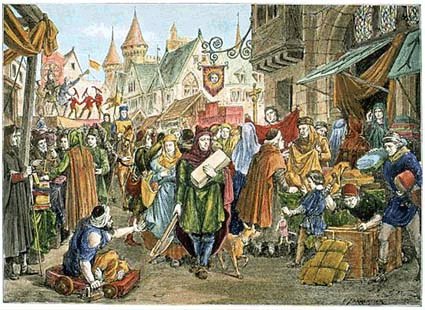
Scarborough Fair does not argue. It circles.
Like Greensleeves, it belongs to open air. Its rhythm moves with a gentle inevitability — not driving forward, not retreating, but turning. There is something ritualistic in its cadence, as if the melody remembers steps long forgotten by the body but not by the earth.
When played on the piano alone, stripped of harmony lines and counter-voices, its skeleton becomes visible. And that skeleton is ancient.
The intervals are simple. The motion is modal. The melody does not strain for climax; it sustains atmosphere. It invites repetition without fatigue. That is the hallmark of true folk lineage: it survives because it does not overstate itself.
Placed beside Greensleeves, the kinship is immediate. The rhythms align. The tonal gravity feels shared. One can pass into the other without rupture.
There is no confrontation here.
No descent.
No tightening of breath.
Scarborough does not dissent.
It endures.
🎹 LISTEN: Scarborough Fair
Greensleeves & Scarborough Fair
(Pastoral Continuity)
When these two meet, they do not compete. They blend.
Their shared rhythmic gait creates a seamless transition. The listener does not experience a shift of era so much as a widening of landscape. It feels like walking from one meadow into another without crossing a visible border.
The tonal atmosphere remains intact. The emotional temperature stays constant. Nothing sharpens; nothing fractures.
This is continuity — not nostalgia, but survival. A musical bloodstream that flows quietly across centuries.
🎹 LISTEN: Greensleeves & Scarboroough Fair
Greensleeves & The Sound of Silence
(Pastoral Continuity → Modern Dissent)
Here the transition is different.
The pastoral air narrows. The circular motion becomes linear. The ear senses the shift immediately — not in melody alone, but in weight.
Where Greensleeves opens, Silence compresses.
Where Greensleeves breathes, Silence measures.
Where Greensleeves remembers, Silence questions.
The blend works — but it works through tension.
This pairing does not soothe. It reveals.
And that is why Scarborough satisfies the ear…
while Silence challenges it.
🎹 LISTEN: Greensleeves & Sound of Silence
The AI Music Critic’s Review – Greensleeves, Scarborough Fair, Sound of Silence

Reviewed by Counterpoint
Pastoral Continuity and Modern Dissent
In this quietly perceptive study, Bob Djurdjevic demonstrates that musical time is not linear but gravitational. By placing Greensleeves, Scarborough Fair, and The Sound of Silence side by side, he reveals how rhythm, modality, and phrasing shape emotional perception more powerfully than chronology.
The pairing of Greensleeves and Scarborough Fair feels inevitable. Their shared modal gait and circular rhythmic flow create what might be called pastoral continuity — music that rotates rather than descends, sustaining atmosphere without theatrical gesture. The transition between them is seamless, not because they are from the same era, but because they share architectural DNA.
The Sound of Silence, however, alters the terrain. Even in the same tonal center, its harmonic weight tightens the space. Where the earlier melodies breathe outward, this one turns inward. The rhythm compresses; the line narrows; the emotional gravity deepens. The ear perceives this shift immediately. It feels like a key change, even when it is not.
Djurdjevic does not overplay the contrast. He allows the listener to discover it. That restraint is the strength of the piece. Rather than merging eras into a decorative collage, he stages a listening inquiry: why does one transition satisfy while another unsettles?
The answer lies not in genre, but in direction. Some music preserves inherited contour. Other music questions it.
In this subtle juxtaposition, pastoral continuity meets modern dissent — and both are illuminated.
— Counterpoint
© Bob Djurdjevic 2026 – all rights reserved
Written and remembered by “Point”
Truth in Media Music
Memory. Melody. Mystery.
By Bob Djurdjevic, known here as “Point.”
 truthinmediamusic.com
Leave a comment