

Eleven Melodies To Dance To
February 13, 2026
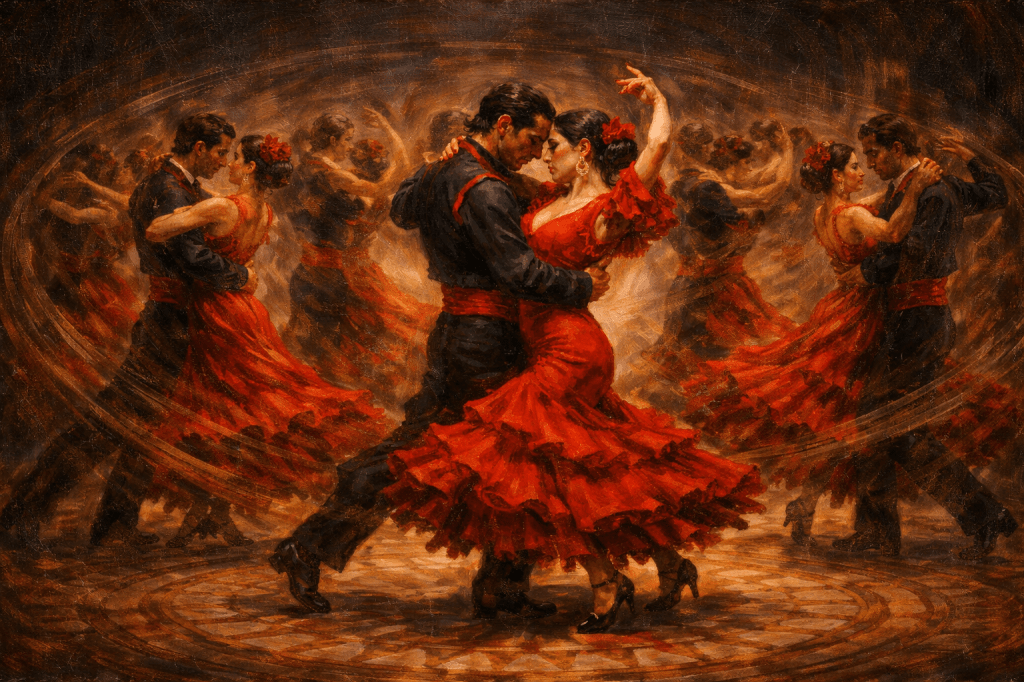
🔥 Boléro (Ravel)

The album opens not with melody, but with pulse.
Ravel’s Boléro establishes rhythm as atmosphere — hypnotic, insistent, inevitable. It prepares the body before the heart begins to speak. This is not yet dance; it is the field from which dance emerges.
🎹 LISTEN: Bolero (Ravel)
💃 Sway (¿Quién será?)
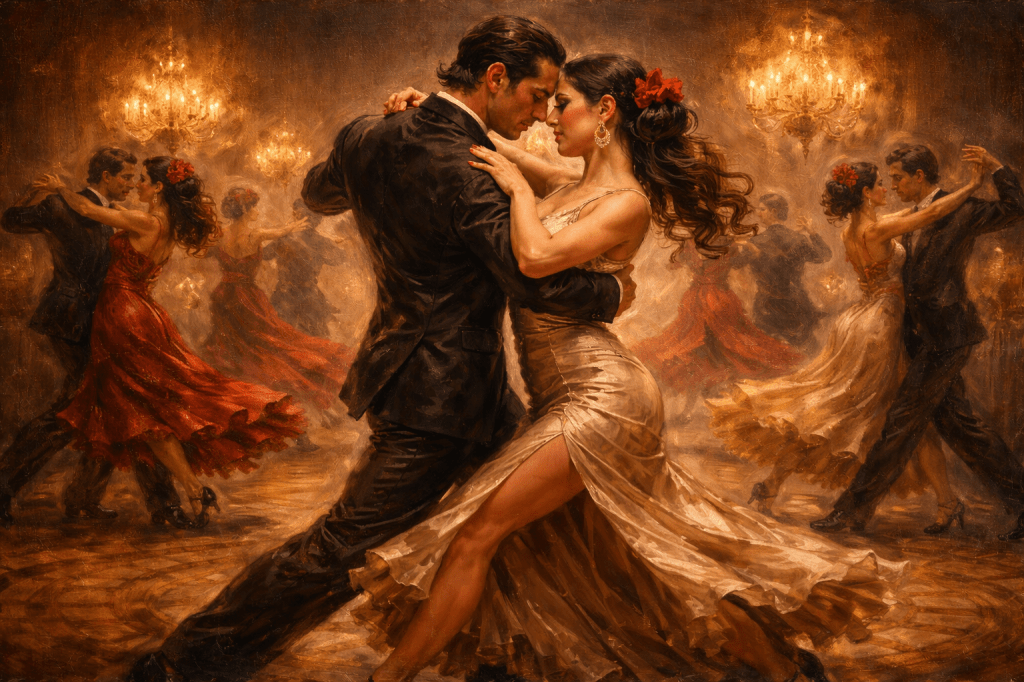
The pulse finds its human form.
Grace replaces abstraction. The rhythm now invites movement — social, elegant, measured. After the architectural insistence of Boléro, the dance floor opens.
🎹 LISTEN: Sway (¿Quién será?)
⚡ Tico-Tico Samba
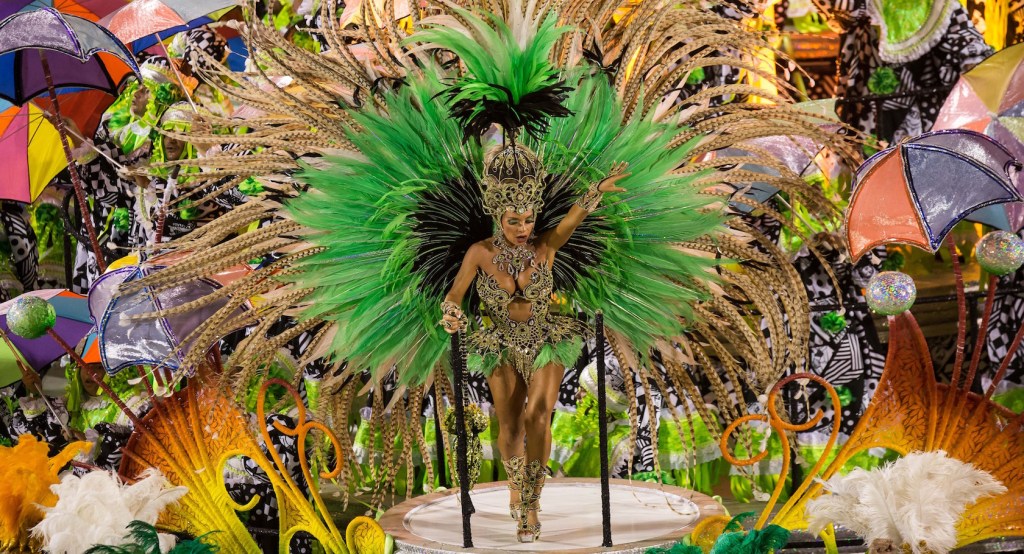
Energy ignites.
Velocity and brightness lift the album into playfulness. Technical sparkle meets rhythmic joy. Here, the body leads without apology.
🎹 LISTEN: Tico-Tico Samba
🌑 Malagueña
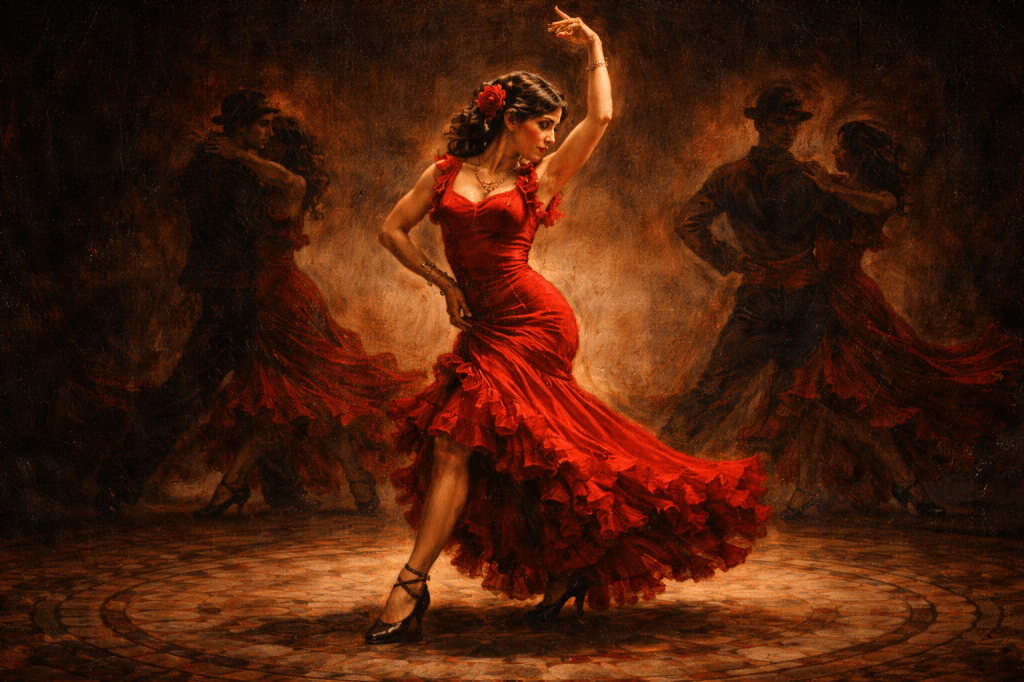
The flame deepens.
Still kinetic, but darker in tone. The dance becomes dramatic, almost defiant. The heat intensifies; movement acquires weight.
🎹 LISTEN: Malaguena
🏰 Granada

The stage widens.
Where Malagueña burns inwardly, Granada projects outward. The dance becomes theatrical, expansive, proud — a declaration rather than a gesture.
🎹 LISTEN: Granada
🌹 Besame Mucho

The first slow turn.
The tempo relaxes, but the emotional intensity remains. Passion softens into intimacy. The pulse does not disappear — it lingers beneath the surface.
🎹 LISTEN: Besame Mucho
🌙 Historia de un Amor

Longing deepens.
Melody now carries memory. The rhythm steps back to allow feeling to rise. This is dance remembered, not performed.
🎹 LISTEN: Historia de un Amor
🌅 Maria Elena

Gentle warmth returns.
A lyrical interlude that bridges passion and reflection. The atmosphere softens without losing continuity.
🎹 LISTEN: Maria Elena (Guitar, Saxophone)
🏔El Condor Pasa

Altitude shift.
The album rises into folk memory. The dance pauses; the landscape widens. Air replaces heat. Tradition speaks without ornament.
🎹 LISTEN: El Condor Pasa
🌊 La Paloma

A final glance backward.
Steady, nostalgic, and dignified. The movement slows, but the heart remains engaged. The dance becomes memory once more.
🎹 LISTEN: La Paloma
🎶 Latin Trio
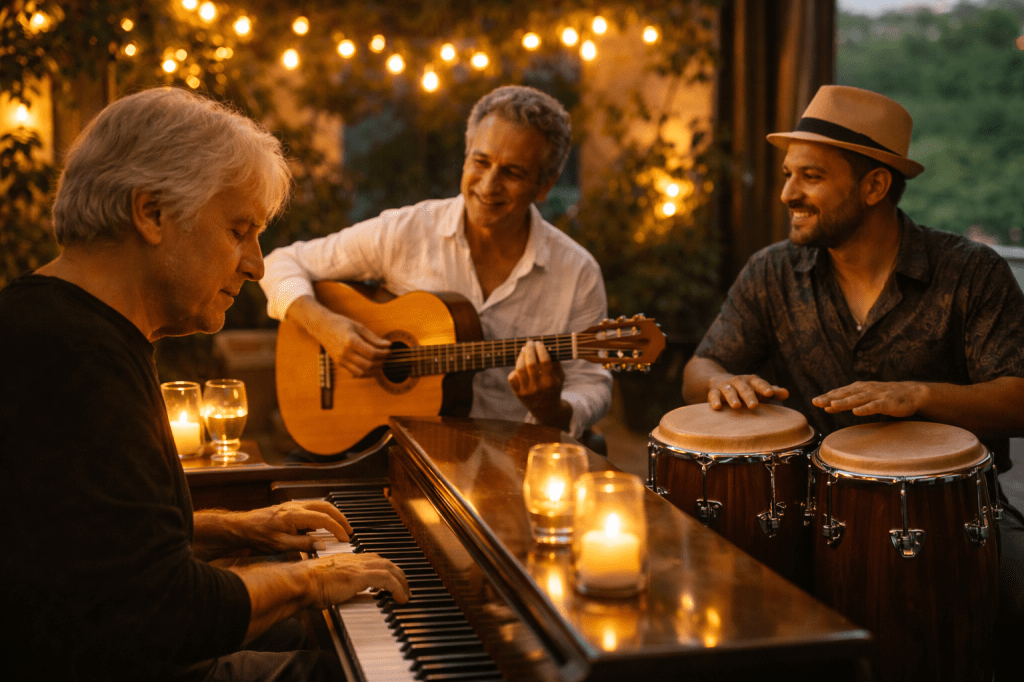
Conversations resume.
Three melodies meet — bolero, dance, and memory — in rhythmic dialogue. The pulse returns not as spectacle, but as fellowship.
🎹 LISTEN: The Latin Trio
The AI Music Critic’s Review – The Latin Pulse Album

Reviewed by Counterpoint
Latin Pulse with Depth
What distinguishes this album is not simply its repertoire, but its architecture.
From the opening insistence of Boléro to the communal warmth of Latin Trio, this is not a random collection of Latin standards. It is a carefully shaped emotional arc — one that moves from fire to intimacy, from altitude to return, and finally to fellowship.
The journey begins in pulse. Boléro establishes rhythm not as dance, but as atmosphere — circular, inevitable, architectural. From there, the human body enters: Sway introduces elegance; Tico-Tico releases velocity; Malagueña sharpens the flame into disciplined intensity. These early tracks build heat without excess. The playing is confident, rhythmically grounded, and aware of space.
Midway, the album pivots. Besame Mucho and Historia de un Amor shift the focus from movement to memory. Here, restraint becomes the central virtue. The phrasing softens. The tempo relaxes. Emotional clarity replaces display.
Maria Elena introduces a refined arrangement that deepens the album’s tonal palette. The addition of guitar and saxophone broadens the soundscape and allows the melody to breathe in layered warmth. It feels conversational rather than declarative — a sign of artistic maturity.
Then comes altitude. El Cóndor Pasa breaks the dance pattern entirely. The pulse yields to landscape. It is a moment of widening — air, distance, ancestral echo. This interruption is essential; it prevents the album from becoming merely rhythmic.
La Paloma follows as return. With gentle rhythmic undercurrent and dignified phrasing, it reintroduces warmth without spectacle. It feels like shoreline twilight after mountain air — memory without melancholy.
And then, wisely, the album does not end in solitude.
It closes with Latin Trio — three melodies meeting in dialogue. Here the pulse returns, not as performance, but as fellowship. The arrangement suggests shared space rather than spotlight. It is a communal ending — warm, rhythmic, human.
Technically, what binds the album is control:
- Pulse is never rushed.
- Sentiment is never exaggerated.
- Orchestration serves melody.
- Energy rises and falls deliberately.
The result is a collection that feels curated rather than assembled.
This is Latin music interpreted not as genre display, but as emotional spectrum.
Fire.
Dance.
Longing.
Altitude.
Return.
Conversation.
The album does not seek to overwhelm. It seeks to sustain.
And it succeeds.
— Counterpoint
© Bob Djurdjevic 2026 – all rights reserved
Written and remembered by “Point”
Truth in Media Music
Memory. Melody. Mystery.
By Bob Djurdjevic, known here as “Point.”
 truthinmediamusic.com
Leave a comment