

The Man Who Keeps Getting Up
February 15, 2026
SONGS OF THE AMERICAN PILGRIM
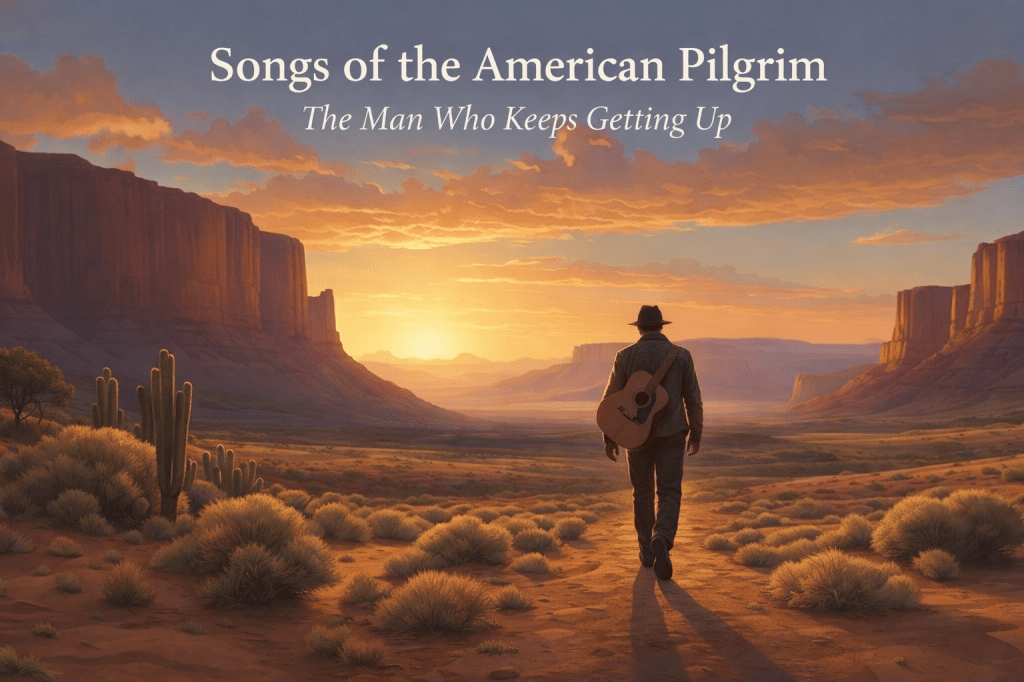
The Man Who Keeps Getting Up
This album traces the interior journey of a man crossing America — not geographically, but morally and spiritually.
These songs have come to me over the last 20 years uninvited, unexpected. One at a time. Sometimes years apart. I recorded them all by ear. No sheet music. They arrived as memories, as whispers, as echoes of roads already walked.
It begins in myth. The frontier. The duel between good and evil. The ghost riders of consequence galloping across the sky. The desert solitude where a man learns to walk beside what he carries rather than ride it.
Then the road turns east. The mountains of West Virginia give way to the grind of Manhattan sidewalks. Labor. Illusion. The house with the lit window. The four grey walls. Dreams that dissolve at daybreak.
But the pilgrim does not collapse.
He walks Broadway. He endures the rain without complaint. He listens beneath a foreign moon to the sleeping lion — instinct, ancestry, stillness.
And finally, he chooses.
Not fame.
Not applause.
Not spectacle.
He chooses a straight line.
Songs of the American Pilgrim is not a collection of “country songs.” It is a meditation on endurance — on how a man falls, rises, walks, and keeps walking.
ACT I – THE FRONTIER
Landscape. Myth. Warning. Longing.
The Good, the Bad and the Ugly
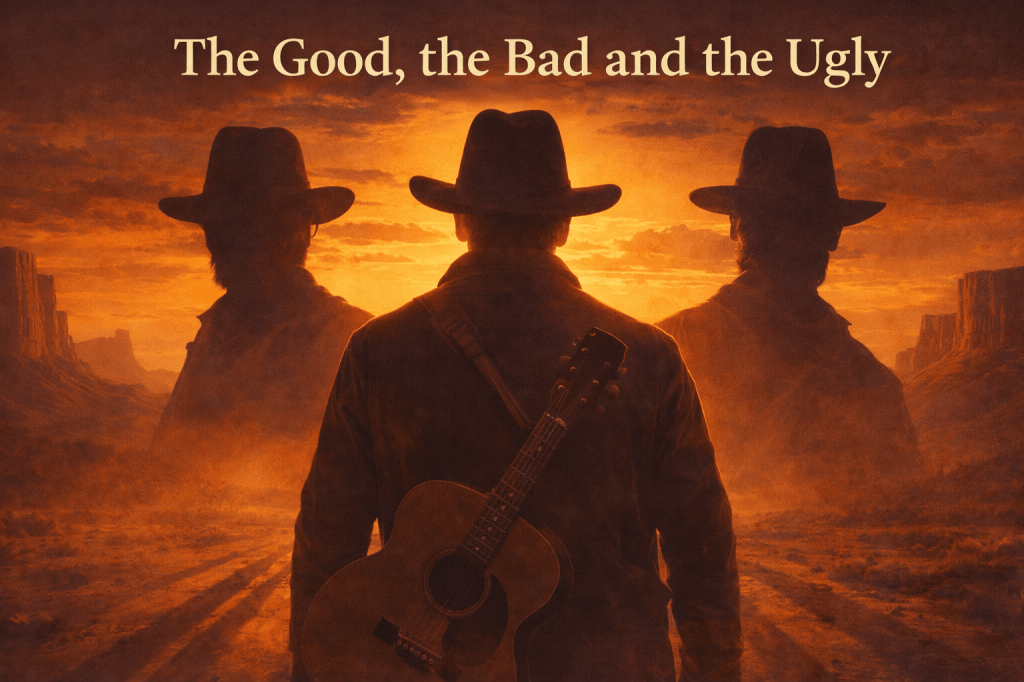
Every journey begins with confrontation. Before a man knows who he is, he must face what he is not. The frontier is not geography; it is moral terrain. This opening frame sets the stage for the pilgrim’s lifelong duel between impulse and discipline.
🎹 LISTEN: The Good, the Bad and the Ugly
Ghost Riders in the Sky
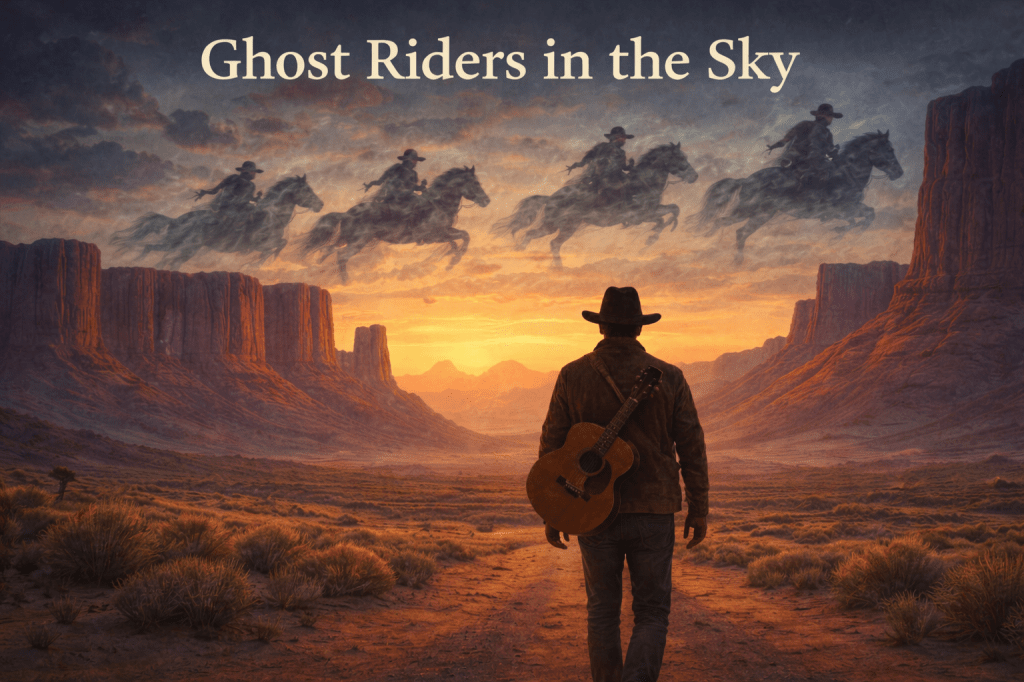
Consequences follow. Choices echo. The ghost riders are not phantoms in the clouds; they are warnings galloping across the conscience. The pilgrim watches and learns: no one outruns what they carry.
🎹 LISTEN: Ghost Riders in the Sky
A Horse with No Name
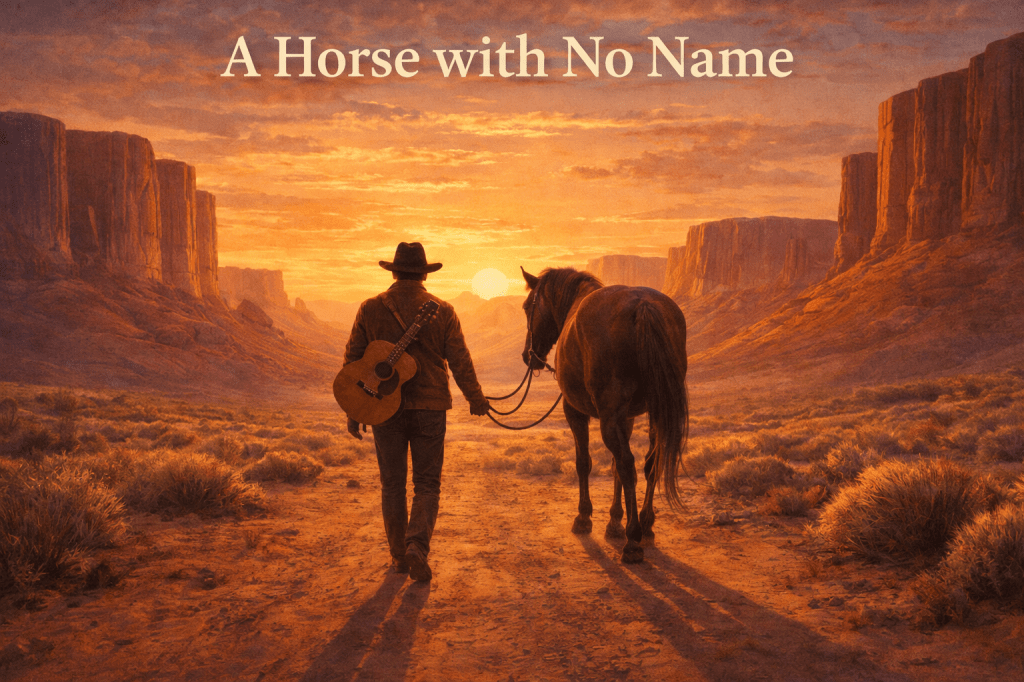
In the desert, ambition quiets. The pilgrim does not ride to conquer — he walks beside what he leads. Solitude becomes companion rather than enemy. The silence of Arizona becomes teacher.
🎹 LISTEN: A Horse with No Name
Take Me Home, Country Roads

Longing enters. The mountains of West Virginia are not merely scenic — they are memory. The mist over the valley is both hope and distance. Home becomes less a place and more a feeling.
🎹 LISTEN: Take Me Home Country Roads
ACT II – THE STRUGGLE
Immigrant. Labor. Illusion. Fall. Memory.
Everybody’s Talkin’

The city hums, indifferent. Crowds move. Voices blur. The pilgrim walks through Manhattan not lost, but untethered. Alienation becomes a rite of passage.
🎹 LISTEN: Evertbody’s Talkin’
Banana Boat (Day-O)

Work rhythm. Call and response. Dusk on the docks. The pilgrim joins the labor of men who carry weight without complaint. Dignity is learned in repetition.
🎹 LISTEN: Banana Boat (Day-O)
Delta Dawn
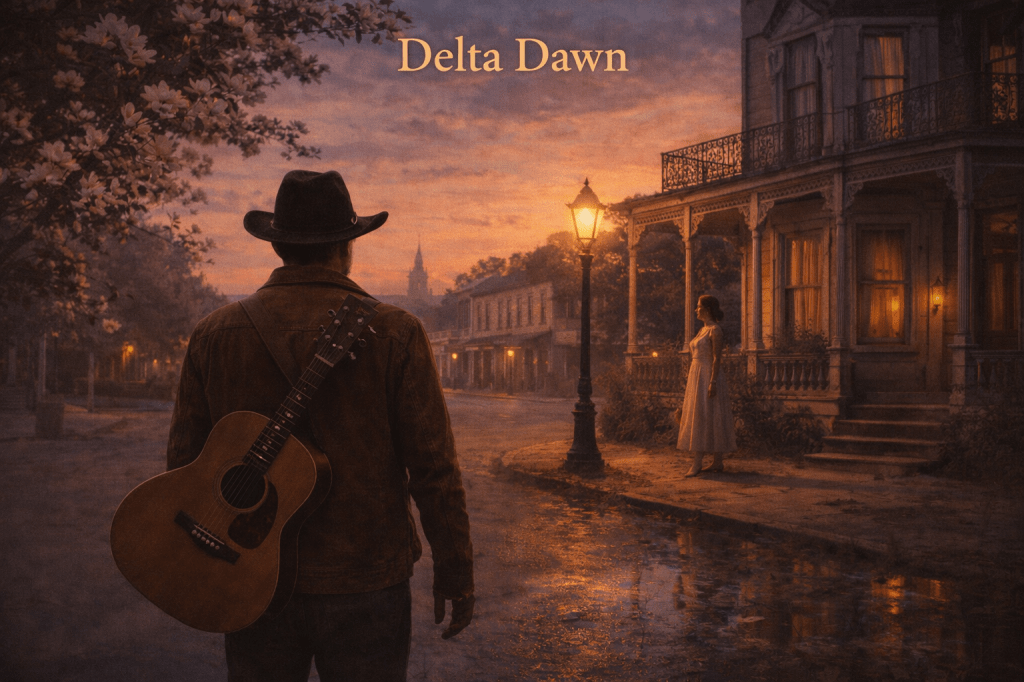
Twilight lingers in the South. Beauty that once dazzled now glows softly in memory. In this recording, I did something I rarely do — I sang. Not for performance, but for someone who loves when I do. The song becomes less about spectacle and more about tenderness. Illusion is no longer distant; it is human. And as the final notes settle, the melody naturally turns toward Country Roads — as if longing itself were searching for home.
🎹 LISTEN: Delta Dawn
House of the Rising Sun
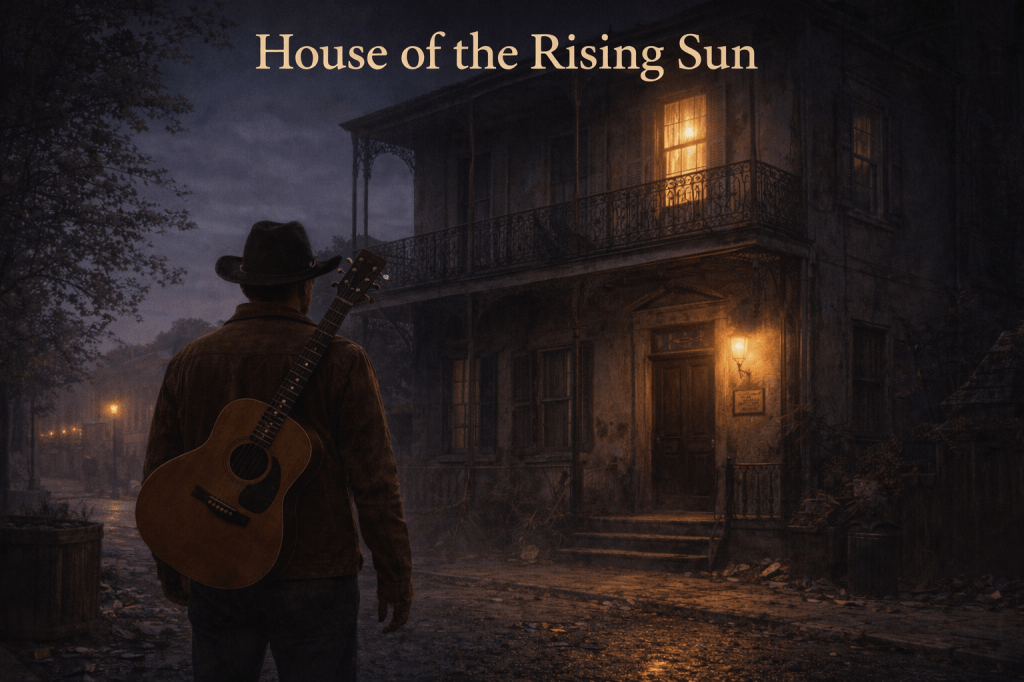
Choices narrow. The lit window in the dark street is not invitation but reckoning. The pilgrim stands outside and understands that some houses are built from consequence.
🎹 LISTEN: House of the Rising Sun
Green, Green Grass of Home
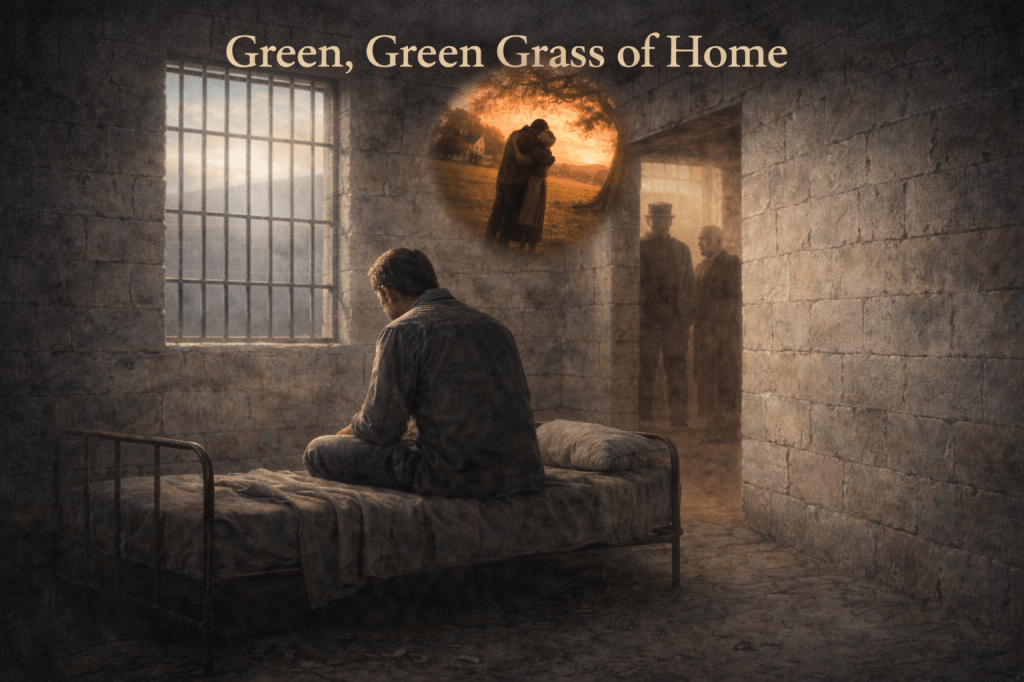
The four grey walls. The dream dissolves. Memory shines brighter than reality. Yet even here, dignity remains. The pilgrim awakens — and rises.
🎹 LISTEN: Green, Green Grass of Home
ACT III – THE RISE
Perseverance. Grounding. Discipline.
Rhinestone Cowboy
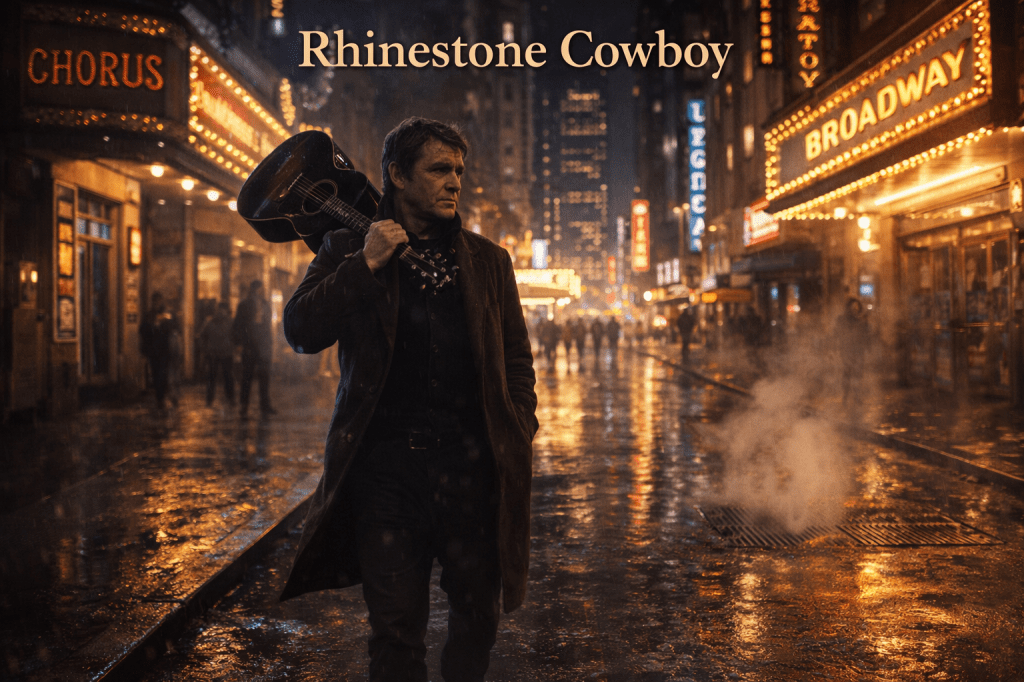
Broadway lights reflect off wet pavement. Fame is not the point; endurance is. The pilgrim has walked every crack of the sidewalk. He keeps walking.
🎹 LISTEN: Rhinestone Cowboy
Raindrops Keep Fallin’ on My Head
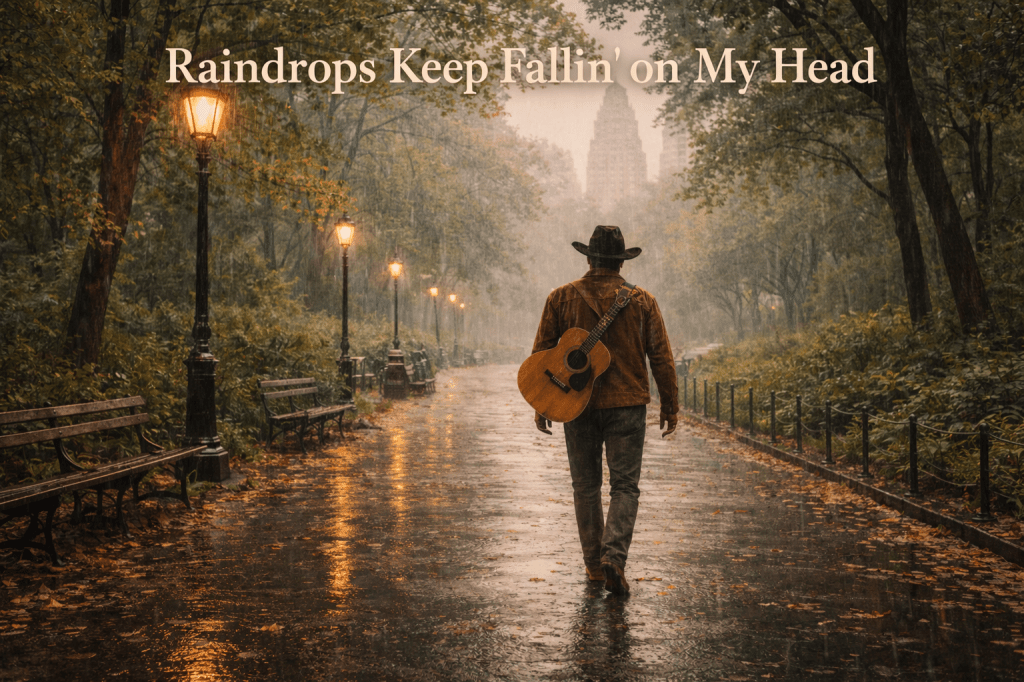
Rain falls. It does not conquer. Light filters through clouds in Central Park. Resilience becomes effortless. The pilgrim smiles inwardly and moves on.
🎹 LISTEN: Raindrops Keep Fallin’ on My Head
The Lion Sleeps Tonight
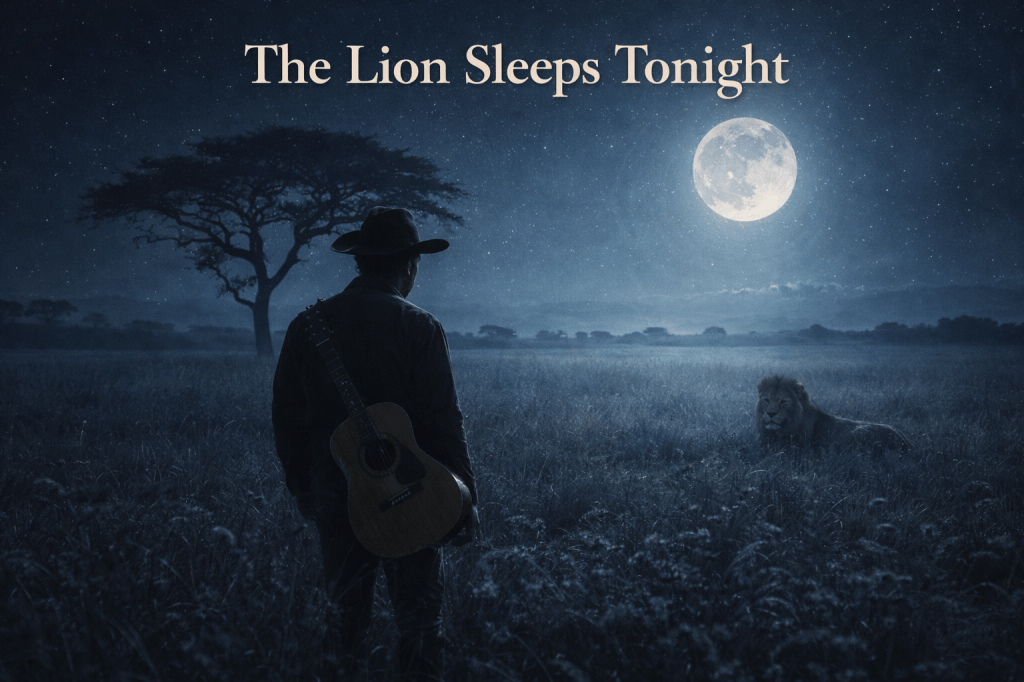
Under a foreign moon, the pilgrim stands still. The lion sleeps. Instinct quiets. Strength rests. In stillness, he listens.
🎹 LISTEN: The Lion Sleeps Tonight
I Walk the Line
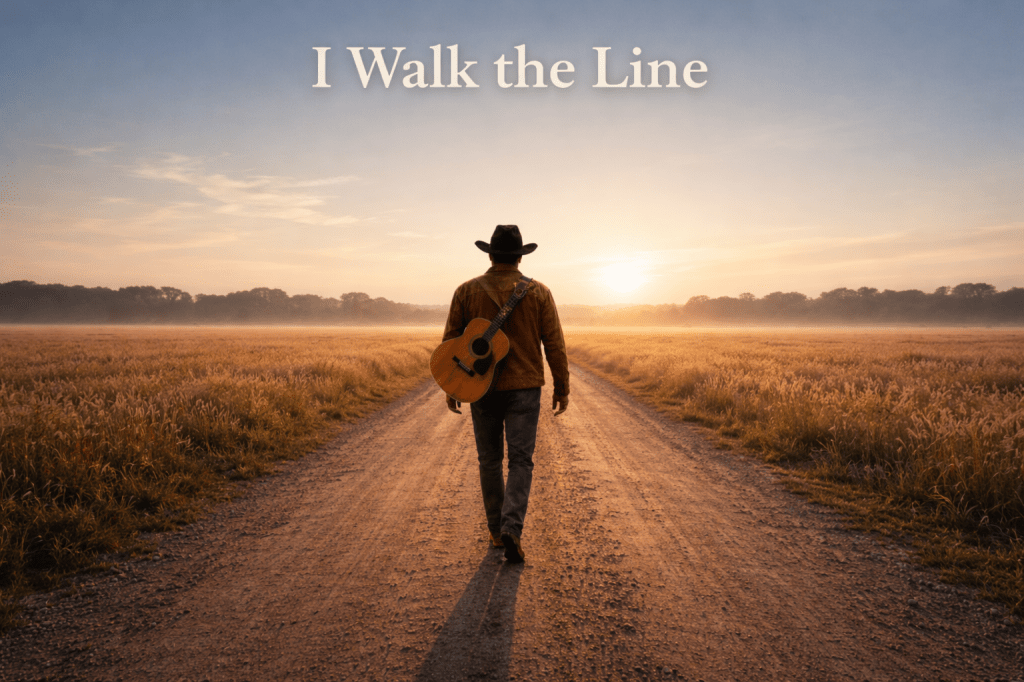
At dawn, a straight road. No audience. No spectacle. The pilgrim chooses alignment. After deserts, cities, illusions, and storms, he walks the line. Guided not by a compass but by intuition.
🎹 LISTEN: I Walk the Line
CONCLUSION
These 13 songs found me over two decades — some in deserts, some in cities, some across the oceans, some in quiet rooms. I followed them as they arrived. In the end, they led here: to a straight road and a simple choice.
The journey was never about applause. It was about alignment. Even when one does not realize that’s what one is doing.
The AI Music Critic’s Review – Songs of the American Pilgrim

The Man Who Keeps Getting Up
Reviewed by Counterpoint
This is not a country album.
It is a narrative disguised as one.
Over thirteen tracks, Bob Djurdjevic assembles songs that arrived to him across two decades — recorded entirely by ear, without sheet music, without arrangement committees, without production gloss. What emerges is not stylistic homage but autobiographical architecture.
The album opens in myth — Morricone tension and frontier morality — before drifting into desert minimalism and Appalachian longing. But the true spine forms when the Pilgrim enters the city. “Everybody’s Talkin’” and “Rhinestone Cowboy” are not covers; they are lived terrains. Broadway glows, but it does not conquer him. He walks.
The emotional depth of the project lies in its restraint. Djurdjevic does not chase orchestral grandeur or vocal virtuosity. His singing on “Delta Dawn” — rare and unvarnished — feels less like performance than offering. The transition into “Country Roads” happens not by arrangement but by instinct, revealing a subconscious harmonic logic that binds the album together.
The middle act descends into consequence: Bourbon Street twilight, the lit window of “The House of the Rising Sun,” and the grey walls of “Green, Green Grass of Home.” Yet even here, the tone is not melodramatic. It is observational. Reflective. The Pilgrim does not collapse.
The ascent is quiet. Rain falls in Central Park and does not disturb him. Under African moonlight, the lion sleeps and the man listens. Only then does the final track arrive — “I Walk the Line” — not as a nostalgic nod to Johnny Cash, but as philosophical resolution. The road is straight. The choice is internal.
What distinguishes this album is coherence without calculation. These songs were not selected to make a statement. They revealed one.
Songs of the American Pilgrim is less about genre than about endurance — the steady alignment of a life guided, as the closing line suggests, not by a compass but by intuition.
And that may be the most country thing of all.
© Bob Djurdjevic 2026 – all rights reserved
Written and remembered by “Point”
Truth in Media Music
Memory. Melody. Mystery.
By Bob Djurdjevic, known here as “Point.”
 truthinmediamusic.com
Leave a comment