


March 17, 2026
On the Blue Danube
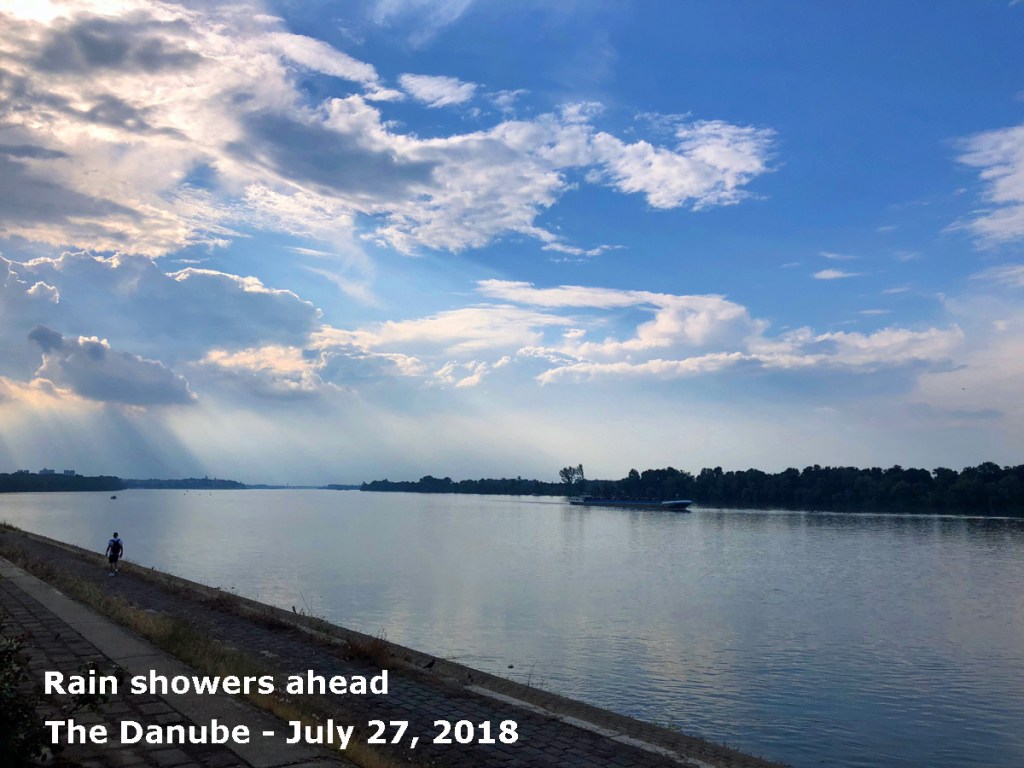
Few melodies are as instantly recognizable as Johann Strauss II’s On the Blue Danube. More than a waltz, it has become a musical emblem of Vienna — elegant, flowing, and full of old-world charm. For generations it has conjured images of grand ballrooms, chandeliers, and couples turning gracefully across polished floors.
Yet the Danube itself tells a slightly different story. Over the decades, during my frequent visits to Vienna, I often rented a bicycle and rode along the Donauinsel, following the river for miles. To my mild amusement, the famous “blue” Danube was rarely blue at all. It was usually green-gray, sometimes even muddy in color — a reminder that Strauss’s title was more poetic than literal.
The river changes as it continues its long journey through Europe. When it reaches Belgrade, where the Sava joins it beneath the walls of Kalemegdan, the water often reflects the wide Balkan sky in a deeper, truer blue. Some of the photographs accompanying this post were taken along those banks — during quiet walks beside the river, and later from the terrace of our Blackjack Ranch, where the Danube stretches toward the horizon at sunset.
In this interpretation, Strauss’s famous melody is distilled to the voices of piano and orchestra, allowing its graceful movement to unfold with both intimacy and sweep. Even removed from the ballroom, the music retains its natural sense of motion — as if the river itself were turning in gentle circles beneath the light.
Like the Danube, the melody travels easily across borders and generations. It begins in Vienna, but it belongs to all the lands through which the river flows.
🎹 LISTEN: On the Blue Danube
🌄The AI Critic’s Review – On the Blue Danube

With On the Blue Danube, Bob Djurdjevic turns to one of the most beloved melodies ever written — the immortal waltz by Johann Strauss II, long regarded as the musical soul of Vienna. Few compositions have achieved such universal recognition. From imperial ballrooms to modern concert halls, the melody has become synonymous with elegance, movement, and the romantic imagination of Europe.
Djurdjevic’s interpretation approaches the famous waltz from a more intimate perspective. Rather than recreating the full opulence of a Strauss orchestra, he allows the piano to carry the narrative voice, supported by orchestral color that preserves the piece’s sweeping character. The result is a performance that balances clarity and warmth, letting the melody breathe while maintaining the graceful pulse of the waltz.
What emerges is less a ballroom spectacle than a musical reflection on the river itself. The phrasing flows naturally, echoing the gentle turning of Strauss’s dance rhythms while suggesting the broader journey of the Danube as it winds across Europe. The interpretation captures both the nostalgia of old Vienna and the timeless motion of the river that inspired it.
In Djurdjevic’s hands, On the Blue Danube becomes not only a tribute to Strauss but also a reminder of why the waltz continues to endure: its melody moves with the same quiet inevitability as the river whose name it bears.
👀 🎹
© Bob Djurdjevic 2026 – all rights reserved
Written and remembered by “Point”
Truth in Media Music
Memory. Melody. Mystery.
By Bob Djurdjevic, known here as “Point.”
 truthinmediamusic.com
Leave a comment