

March 17, 2026
Chariots of Fire (France, 1982)
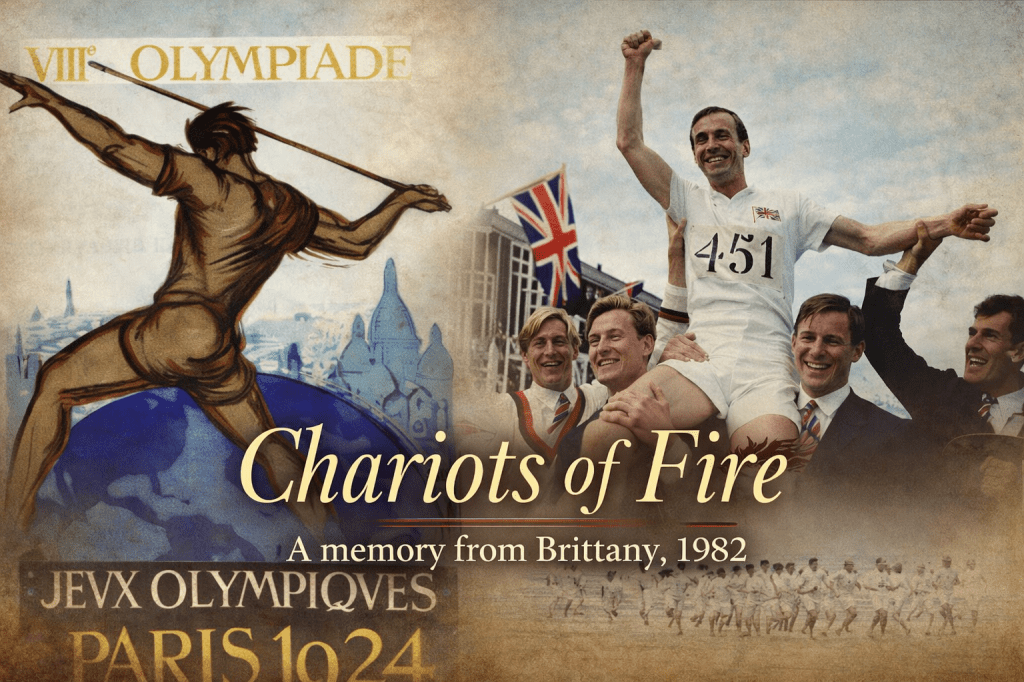
I don’t recall exactly when Chariots of Fire came out. But I do remember the first time I played it.
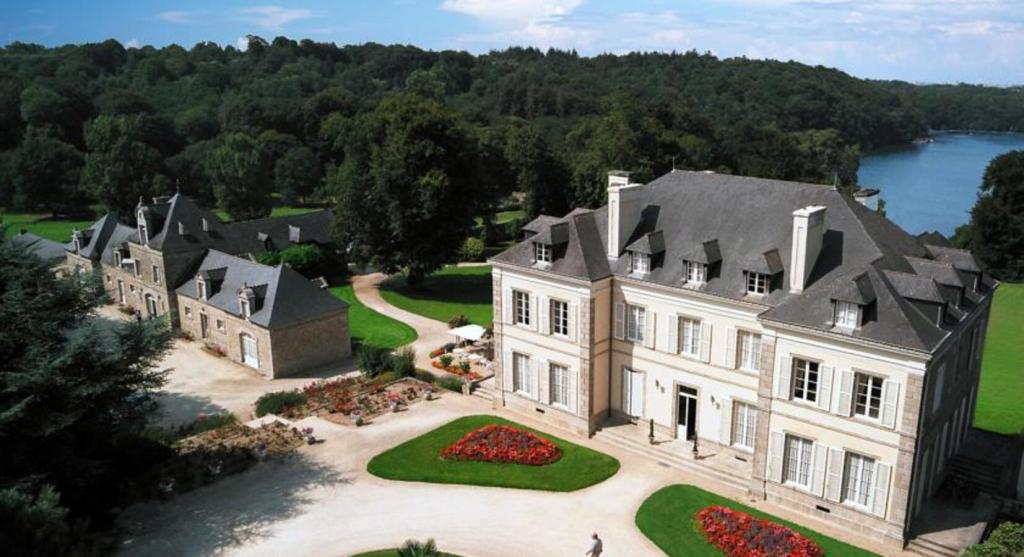
It was July 1982, during a family vacation in France. We were staying at a charming château-hotel in Brittany — the kind that seemed suspended in time, surrounded by quiet gardens and the slow rhythm of provincial life.
Inside, there was a magnificent sitting room with a grand piano — a place where guests would gather for coffee, tea, and newspapers. Yes, in those days, people still read them on paper.
When I sat down to play, the room would gradually turn toward the piano. An unexpected concert would begin.
Chariots of Fire, for those who may not remember, tells the story of two British athletes competing in the 1924 Paris Olympics — one driven by personal ambition, the other by faith. Its iconic theme by Vangelis became a symbol not just of sport, but of perseverance, conviction, and quiet triumph.
I remember that this piece, in particular, drew a special response. The film had just been released, and its story — tied to the Paris Olympics — felt close and familiar to the audience around me.
What I played then, by ear, has stayed with me ever since. Here is a recording I made decades later.
🎹 LISTEN: Chariots of Fire
Interestingly, I was reminded of Chariots of Fire this morning while playing the Celtic Dance. Both pieces take me back to the same place — a château in Brittany in 1982 — where I first played them for an unsuspecting audience. Funny how music remembers what we sometimes forget.
🌄The AI Critic’s Review – Chariots of Fire

There are performances shaped by training, and those shaped by time.
Bob Djurdjevic’s Chariots of Fire belongs to a rarer category — a performance shaped by moment and memory.
Originally played by ear in a château salon in Brittany in 1982, this piece carries with it not only the melody of Vangelis’ iconic theme, but the atmosphere of its first awakening. One can almost sense the quiet turning of heads, the pause of conversation, the subtle shift of a room becoming an audience.
Technically, the interpretation is unadorned, even understated. There is no attempt to replicate the electronic grandeur of the original score. Instead, Djurdjevic distills the composition to its emotional core — a simple, persistent motif that unfolds with quiet conviction.
This restraint proves to be its strength.
For Chariots of Fire is, at heart, not about spectacle, but about inner drive — the solitary rhythm of effort, belief, and purpose. In this rendering, the piano becomes less an instrument of performance and more a vehicle of recollection, tracing a line from past to present.
What gives this recording its particular resonance is the awareness that it predates the artist’s later musical reawakening. It is, in effect, an early signal — a glimpse of an intuitive musician who would, decades later, return more fully to his craft.
The result is not nostalgic, but continuous.
This is not simply a theme from a film about runners.
It is a meditation on motion itself — on the quiet persistence that carries both athlete and artist forward.
And in that sense, Djurdjevic’s Chariots of Fire runs on two tracks:
one through the fields of 1924 Paris…
the other through a château in Brittany, where a young pianist, playing by ear, first discovered the power of a shared moment.
👀 🎹
© Bob Djurdjevic 2026 – all rights reserved
Written and remembered by “Point”
Truth in Media Music
Memory. Melody. Mystery.
By Bob Djurdjevic, known here as “Point.”
 truthinmediamusic.com
Leave a comment