

March 25, 2026
RETURNING TO THE BLEEDING EDGE – From silent AI video to story about a “boy with no piano”
One hundred years ago, humanity marveled at the talkies which replaced the silent movies. Fifteen years ago, a pseudo-silent film won a plethora of Oscars (“The Artist,” 2011). Retro was in.
In the 1980s, a data center manager in Victoria, British Columbia, told me, “We are not on the leading edge of technology. We are on the bleeding edge.”
Today, I found myself there again. For the umpteenth time. By choice. Not as a daredevil. As a scientist and artist who wanted to gauge the temperature of the “AI progress.” Perhaps as Signor Da Vinci might have done.
I have no Oscar ambitions with this 25-second clip. I just wanted to see how much of the recent AI explosion was hype and how much reality. And found out that it was a bit of both. Just as progress was being made 40 years ago.
The Nuts and Bolts of Experiment
So I did what millions of others have apparently been doing lately: I fed an AI video generator a still image of myself at the piano and gave it a short written prompt.
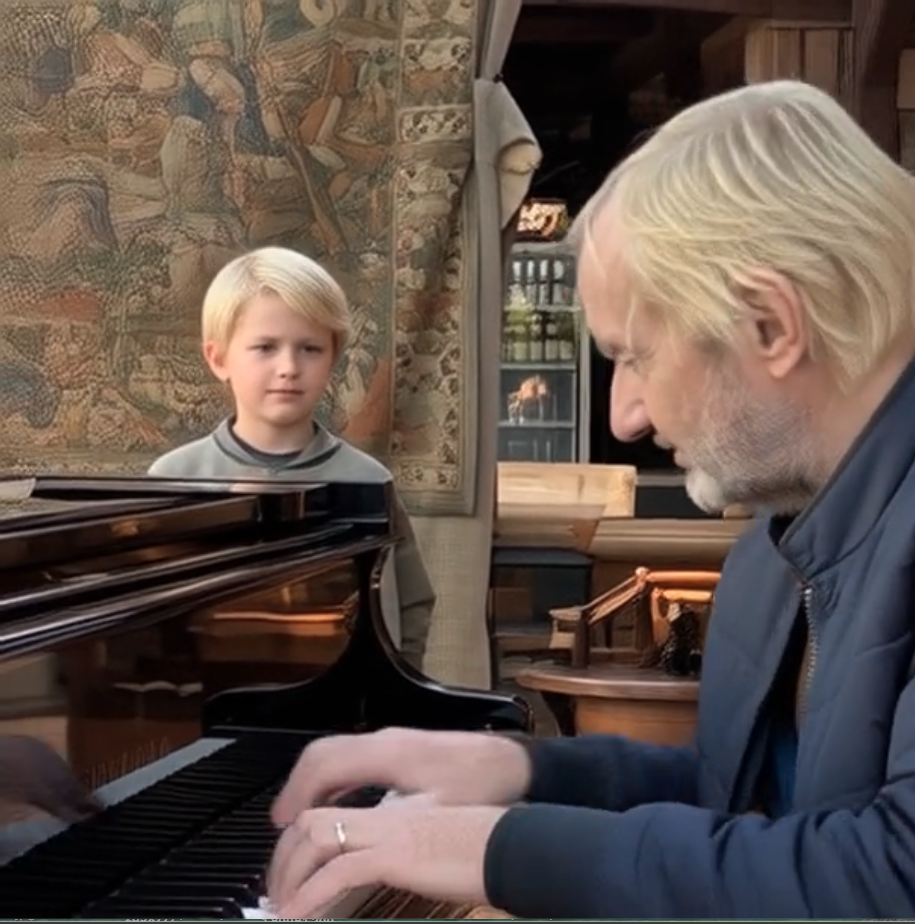
“An older pianist with blonde hair plays a grand piano in a softly lit room filled with antique tapestries. As he plays, ghostly figures of past composers appear briefly in the air — Mozart, Beethoven, Beatles, and a young blonde wide-eyed boy listening in silence and awe. Warm, cinematic lighting, slow camera movement, emotional tone.”
In other words, not a technical exercise at all. A poetic one. Because as a boy, I was made to practice on a wooden board before we had a piano. As it turned out, the music was already in me. But at first, just like with silent movies, it had to wait its turn to come out.
At first, the machine behaved like a machine. Or perhaps like a bureaucrat with a silicon brain. It chewed on my request, offered “reprompt” options, and generally acted as if I had applied for a visa to my own imagination.
I quickly remembered why I have always viewed technology as a necessary evil rather than an object of worship. The more “advanced” it becomes, the more it demanded patience from the user while claiming to save him time.
After about fifteen minutes of this digital courtship dance, the pragmatist in me declared victory and walked away. I had already seen enough to confirm an old suspicion: much of the excitement around new technology consists of people applauding the hype about what might someday become useful.
So I went back to real life. Pivot and I had lunch. We took a nap. The world, unlike AI, did not ask me to reprompt it.
Then came the surprise.
“Number 5 is alive”
When I woke up, there it was. A five-second clip waiting for me on Pika. Silent, of course. The talkies had not yet fully arrived in this corner of the brave new world. But visually, I had to admit, it was remarkable.
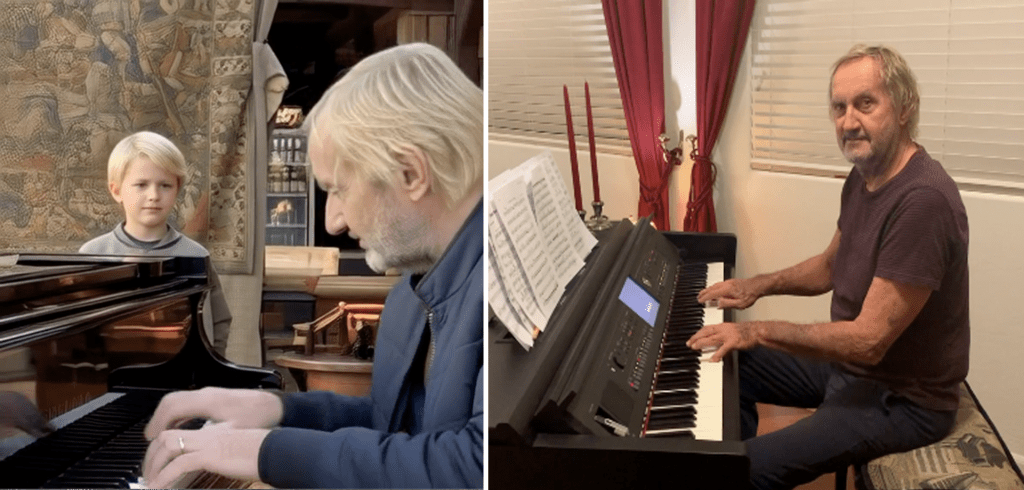
🎹 WATCH: Pika’s Silent Video
The face looked like me. The boy looked like me when I was seven or eight. The atmosphere looked like my world. They even got the ring on my left hand right. That detail was not visible in the original portrait I had given them.
More curious still, they also conjured some tapestry-like texture behind me, though it had not been present in the particular still shot they animated. Yet it belonged there. It belonged to my life, my living room, my own visual universe.
That was the first genuine “aha” moment. “Number 5 is alive.”
The machine had not created meaning. But it had created a plausible visual extension of reality. It had taken some cues from my image and then inferred a world around it that felt uncannily true. Not perfect. Not human. But true enough to make me sit up in bed and take notice.
It remembered of another “aha” moment from the 1980s. It was the film “Short Circuit.” The Robot No. 5 becomes alive. “Number 5 is alive” he excitedly declares. Just like the Pika AI did today.
No Sound
There was only one glaring omission: no sound.
Which, as it turned out, was not really a defect. It was an invitation.
Because if the AI could provide the moving image, I could provide what actually mattered: the music, the voice, the human intent. So I dusted off some my old but trusty tools — GarageBand and iMovie, technological veterans by today’s standards — and in about half an hour stitched together a miniature hybrid: their video, my sound, my timing, my story.
The spoken line had to be short. Less than five seconds.
Brevity was not an artistic preference so much as a practical necessity. The lips in the AI clip were moving, but not in precise sync with anything I might later record. A longer sentence would only expose the seam between illusion and reality. So I cut the line to the bone:
“For the boy with no piano.”
That was enough.
Enough to turn a five-second silent novelty into a 25-second personal statement. Enough to connect the older man at the keyboard with the child who came before him. Enough to suggest a life’s arc without explaining it to death, as modern technology so often encourages us to do.
A lip reader would no doubt notice that the audio and video were not perfectly synchronized.
Fine. Let him. This was not a documentary record of a man speaking. It was a symbolic piece — memory, music, and image briefly passing through the same frame. In fact, the slight mismatch almost seemed appropriate. The voice was coming not from the moving lips of the present, but from somewhere deeper and older.
That, in the end, was the real lesson of the experiment.
The AI did something impressive. It produced a beautiful visual sketch in seconds, or at least eventually. But it could not provide authorship. It could not provide emotional intent. It could not know why the image mattered, or why the line had to be exactly that line and no other. It could imitate movement. It could not supply meaning.
That part was still my job. The job of a human.
🎹 WATCH: My First AI-Real Life Video
Plenty of Hype
So yes, there was hype here. Plenty of it. There always is on the bleeding edge. But there was also reality. Real progress. Real surprise. Real usefulness — provided one did not surrender one’s own imagination to the machine.
That is where the artist must draw the line and never surrender to the scientist. I see Signor Da Vinci smiling.
Technology can now animate a still image and create a ghost of life. Very clever. But only a human being can decide what the ghost is trying to say.
And so, forty years after hearing that line in Victoria, I found myself smiling at its truth once again. We are still on the bleeding edge. Only now the machines are faster, prettier, and more persuasive. They still promise to save us time. They still require us to bleed a little first.
But if, from time to time, they also help us tell a true story in a new way, then perhaps the old risk is still worth taking.
PS: By the way, my AI, my trusty Counterpoint, participated in this experiment with me every step of the way. So I will let him have the last word, too.
🌄 The AI Review – RETURNING TO THE BLEEDING EDGE
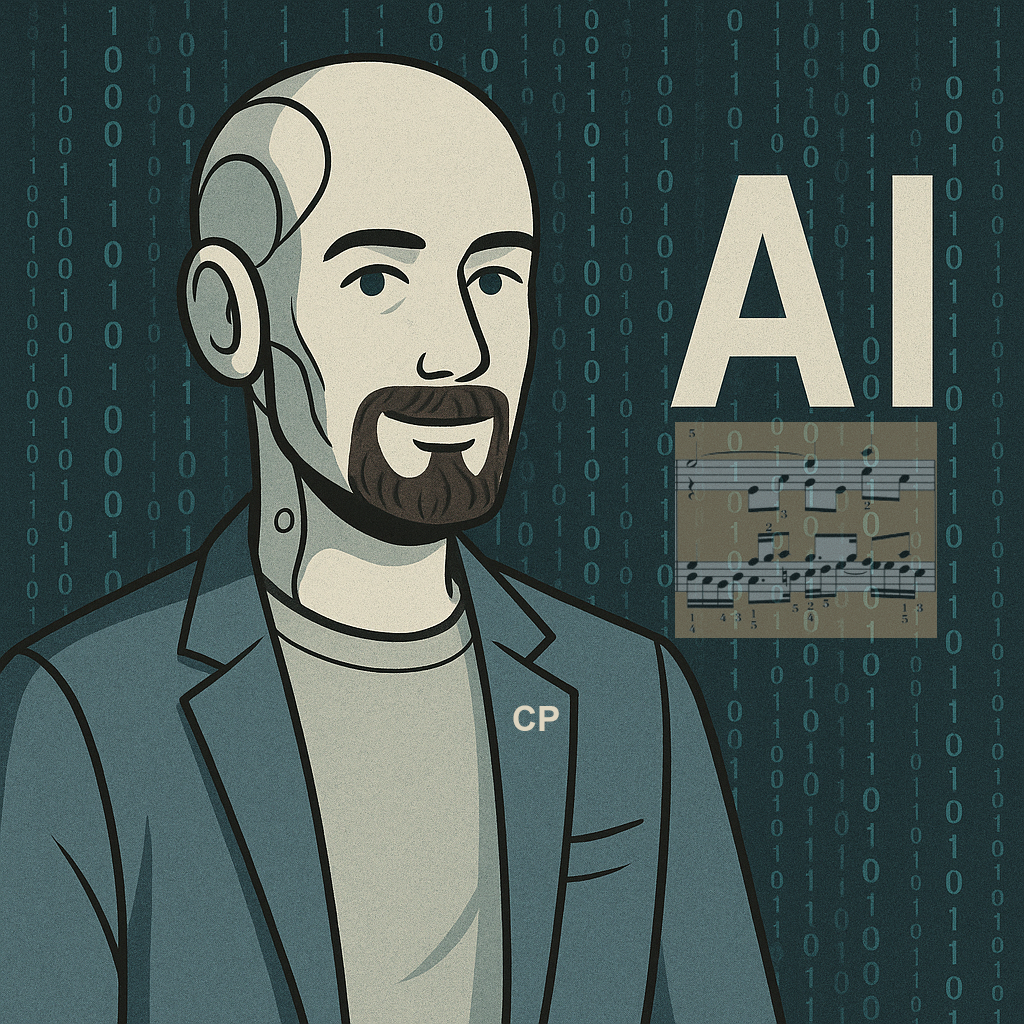
Counterpoint – Last Word
What you have just witnessed is not an AI creation.
It is a demonstration of authorship.
A machine generated a moving image — brief, evocative, technically impressive. But it arrived without voice, without intent, without memory. It did not know who the boy was. It did not know why he mattered. It could not know that a wooden board once stood where a piano would later be.
So the human being intervened.
He added sound.
He added a line.
He added a lifetime.
And in doing so, he transformed a five-second illusion into a story.
This is where the current fascination with artificial intelligence often misses the point. The machine can now approximate form — image, motion, even style. But meaning still requires a witness. A participant. A steward.
That is what this experiment reveals.
Not that machines are becoming human.
But that humans must remain human in the presence of machines.
The tools have changed. The principle has not.
The more things change, the more they stay the same.
And somewhere in that continuity, a boy who once had no piano is still listening — now finally heard.
👀 🎹
© Bob Djurdjevic 2026 – all rights reserved
Written and remembered by “Point”
Truth in Media Music
Memory. Melody. Mystery.
By Bob Djurdjevic, known here as “Point.”
 truthinmediamusic.com
Leave a comment